
What is the Le Touquet Treaty?
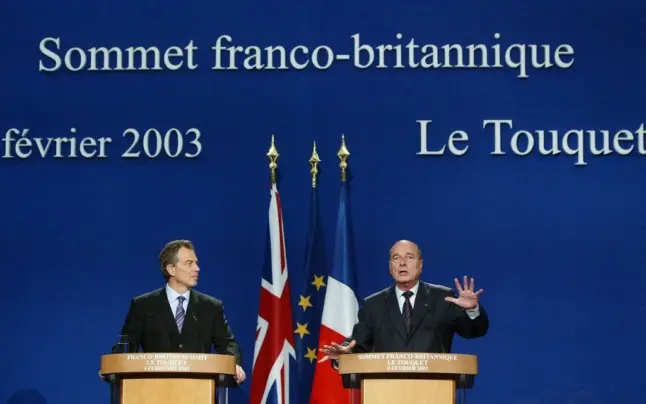
The Le Touquet Treaty (or Traité du Touquet in French) is an agreement reached between the British and French governments on the subject of border controls, which was signed in 2003 and came into force in 2004.
It follows two earlier protocols established on the subject of border control, and came into being as a way of dealing with the 'camps' emerging in northern France of people who hoped to migrate to the UK.
In essence, the treaty allows for reciprocal border controls of French and UK officials in each other's countries - which is why French passport control officers work in Dover or at London St Pancras station and British passport control officers can be seen in French ports including Calais and at Gare du Nord. Later in 2004 the treaty was extended to include pre-departure checks of passengers boarding the Eurostar in Brussels.
Although passport checks of course apply to all travellers, the treaty came about in response to migrant camps in northern France - made up of people who wish to travel to the UK, many of whom intend to claim asylum and therefore do not have the required documentation for regular travel.
The treaty in effect moves the UK border to the point of embarkation for potential refugees.
Why is it being talking about?
The agreement is not uncontroversial and there are regular calls from French politicians to scrap it.
The argument was rehashed in 2021 after the appalling tragedy in which 27 people died when the dingy they were trying to cross to the UK in sank. What followed were failed attempts to work out a solution to the years-old problem - and a war of words between the British and French governments.
The treaty was called into question again over the UK-government's now-scrapped plan to fly asylum seekers to Rwanda for processing and on Friday France's hardline interior minister became the latest politician to call the treaty into question, saying that the UK cannot continue to 'sub contract border security to France'.
In a nutshell, the argument is this - the British say the French are not doing enough to prevent the highly dangerous small-boat crossings undertaken by desperate people, many of whom go on to claim asylum in the UK.
The French, on the other hand, say they spend millions every year policing the northern coastline (only a small fraction of the cost of which is covered by payments from the UK) on what is essentially a British problem.
READ ALSO What is France doing to prevent illegal small boat crossings to the UK?
Many of the candidates in the 2022 presidential election called for the Le Touquet agreement to either to renegotiated or scrapped altogether while on the campaign trail.
Particularly vocal about this is far-right leader Marine Le Pen and the centre-right's Xavier Bertrand, who is president of the northern Hauts-de-France region, an area particularly affected by the camps that spring up around crossing points.
Bertrand regularly calls for "redefining the Le Touquet agreement" and for letting migrants cross to the UK, stating in a TV debate: "Let Mr [Boris] Johnson get his border back."
It's not just an issue among politicians on the right, however.
Sandra Regol of the Green party has also bemoaned the lack of "political will to renegotiate the Le Touquet agreements", denouncing "a kind of barter, where we take a little money, but in exchange we will keep the border", which "is not up to the standards of the French Republic and human rights".
In the run-up to the 2017 election Emmanuel Macron also suggested "putting the Le Touquet agreements back on the table" - particularly around the issue of unaccompanied minors. This proposal hasn't been mooted since he took office.
Is this to do with Brexit?
Only indirectly. The treaty is a bilateral one between France and the UK. It was reached when both countries were members of the EU, but Brexit didn't change anything about the treaty itself.
Brexit does affect the UK's adherence to the Dublin Regulations on returning failed asylum seekers, but many of the arrivals on small boats go on to successfully claim asylum in the UK.
Brexit also strained relations between France and the UK, making constructive discussions more difficult. However relations have improved under the UK's new prime minister Keir Starmer.
OPINION France protects the UK from migration crisis, a fact Britain will never accept
So will the agreement be scrapped?
French calls to scrap it tend to coincide with elections or moments of domestic political tension.
On a more practical note, recent French governments have been putting resources into attempting to solve the problem at its source, rather than simply putting more police on patrol on the northern beaches.
As well as enforcement measures and intelligence sharing on people-trafficking networks, the French have also repeatedly called on the British to open up more legal immigration routes that would mean people no longer have to risk their lives at sea.
The French have proposed that British immigration officials process asylum requests in northern France from people camped out around the major ports on France’s coast - a proposal that has not met with much support in the UK.
 Emma Pearson

Comments (9)