
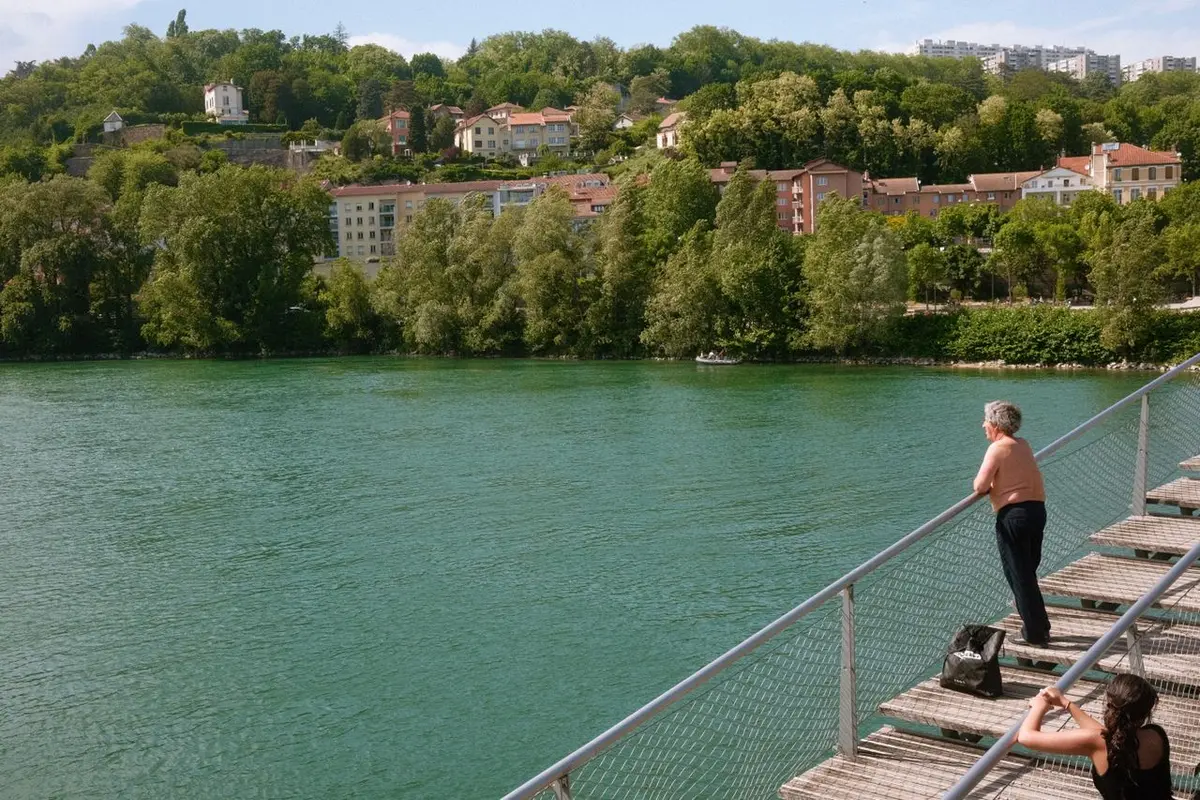
The Regional Court of Accounts (CRC) for the Auvergne-Rhône-Alpes region and the Court of Accounts of the Republic and Canton of Geneva have jointly conducted an audit on the management of cross-border watersheds in the Geneva area—though the study excludes the critical issue of the Rhône River and Lake Geneva, which are managed directly at the national level by the two states.
"We are dealing with a rather magical, unique, and extremely complex territory; it is, in effect, a single metropolitan area—yet there is a border running right through the middle," explained Barbara Falk, President of the CRC Auvergne-Rhône-Alpes, during a press briefing.
"Natural phenomena, however, have absolutely no regard for human-drawn borders," she noted. Furthermore, the frequency and intensity of extreme climate events have been on the rise in recent years—as evidenced, for instance, by the droughts of 2023 and 2026, and the historic flooding of the Arve River in November 2023.
"In the face of these emerging risks, national administrative boundaries do not align with the physical realities of watercourses and aquifers," the report emphasizes. It points out that the two countries share the surface waters of Lake Geneva—Western Europe’s largest surface water reserve—as well as 2,400 kilometers of waterways (including the Rhône) and several underground aquifers.
Yet, certain anomalies persist. Some are purely administrative—such as the Divonne River, which is renamed the Versoix once it crosses the Swiss border.
And others that can have a real impact—for instance, when there is a one-month discrepancy between the two countries in the implementation of water-use restrictions. It is therefore necessary to "adopt a cross-border perspective at the level of the river basins, fostering a 'water culture'—rather than a purely administrative one—that permeates the practices of both countries," argue the auditors who conducted this assessment.
They propose, among other measures, the establishment of a cross-border water observatory, joint prevention initiatives, and enhanced coordination in the event of a crisis.
In light of the growing risks associated with global warming, France and Switzerland signed two agreements in September 2025: one concerning the regulation of the waters of Lake Geneva (Lac Léman), and another regarding cooperation on the transboundary waters of the Rhône.
Comments