
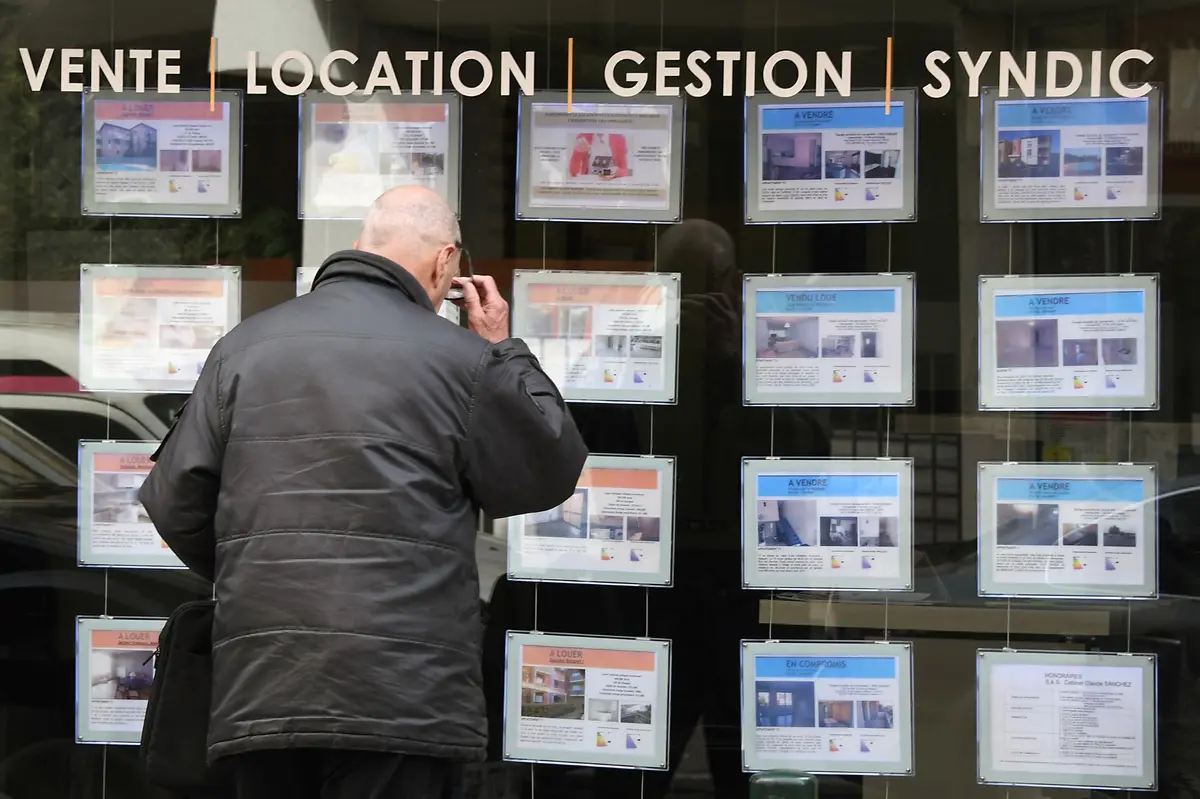
If you are looking to rent a property in France, you should be aware that standard lease agreements for both furnished and unfurnished properties, including shared tenancies with a single lease, have been changed recently to include a termination clause in the event of unpaid rent or failure to pay a security deposit.
The decree, published in the Journal Officiel on October 9th, 2026, also updates the information notice attached to any lease agreement.
READ ALSO Renting property in France: Should I go for furnished or unfurnished?
An automatic termination clause is now integrated into new lease models in the event of:
- non-payment of rent;
- non-payment of charges;
- of non-payment of the security deposit.
The requirement for an explicit and common termination clause is not new. The obligation already applies to leases concluded or renewed since July 29th, 2023.
The decree, however, means that the regulatory lease models have now been adapted to take the requirement into account.
When the accommodation is intended to be tenants’ primary residence, this information must be included in the lease agreement. The lease must then specify that the property must be occupied as the primary residence, taking into account new rules allowing certain municipalities to impose such a requirement for certain types of housing.
READ ALSO Married, civil partnership, or just living together – rules for renting a property in France
From now on, leases can – optionally – include the mobile phone numbers of both landlord and tenant, to make it easier for either to contact the other as necessary.
Main residences
Meanwhile, the information notice attached to rental contracts for housing used as a main residence has been noticeably altered. The new notice updates information relating to:
- the rights and obligations of the landlord and the tenant;
- the terms and conditions for setting, adjusting and revising the rent;
- rental guarantees (security deposit, independent guarantee and surety bond);
- dealing with pests in the home;
- rent arrears, termination clauses and the prevention of evictions;
- the procedures for issuing the notice to vacate and leaving the accommodation;
- the procedures for conciliation and settlement of rental disputes.
READ ALSO Explained: How much is your French landlord allowed to raise your rent?
So what does the termination clause actually change?
Very little, beyond the fact that the terms for termination of a lease in the case of non-payment of rent is explicitly and clearly stated on the rental agreement.
The legal process, and the protection for tenants, in the event of non-payment of rent remains the same.
The termination of a lease can only occur after a payment order has been in place and gone unresolved for six weeks.
The actual process of evicting a tenant remains the same, as does the process for tenants of ending their lease voluntarily and moving out.
The new leases also do not alter, for example, any of the rules surrounding France’s trêve hivernale, a period from November 1st to March 31st every year when landlords cannot evict tenants who have fallen behind with their rent.
READ ALSO Eviction season opens in France as ‘winter truce’ ends
Comments