
Welcome to our brand new weekly newsletter on the subject of France's crunch presidential election - a hugely consequential vote for both France and Europe, as the country faces the very real possibility of its first far-right leader since World War II.
'But the election isn't until April next year', I hear you say, 'that's seven months away, why are you launching this newsletter now?' Well, because not only is campaigning well underway but the election is already affecting almost every aspect of domestic politics, as well as politics where it really counts in France - on the street.
The recent French lycée student protests may have been about schools, but you didn't have to look far to find placards referencing next year's election.
If you don't want to miss this column and if you want to read it before we post it online, just go to your newsletter options and subscribe to the '2027 presidential race' alert.
So let's get started on the latest from the campaign trail . . .
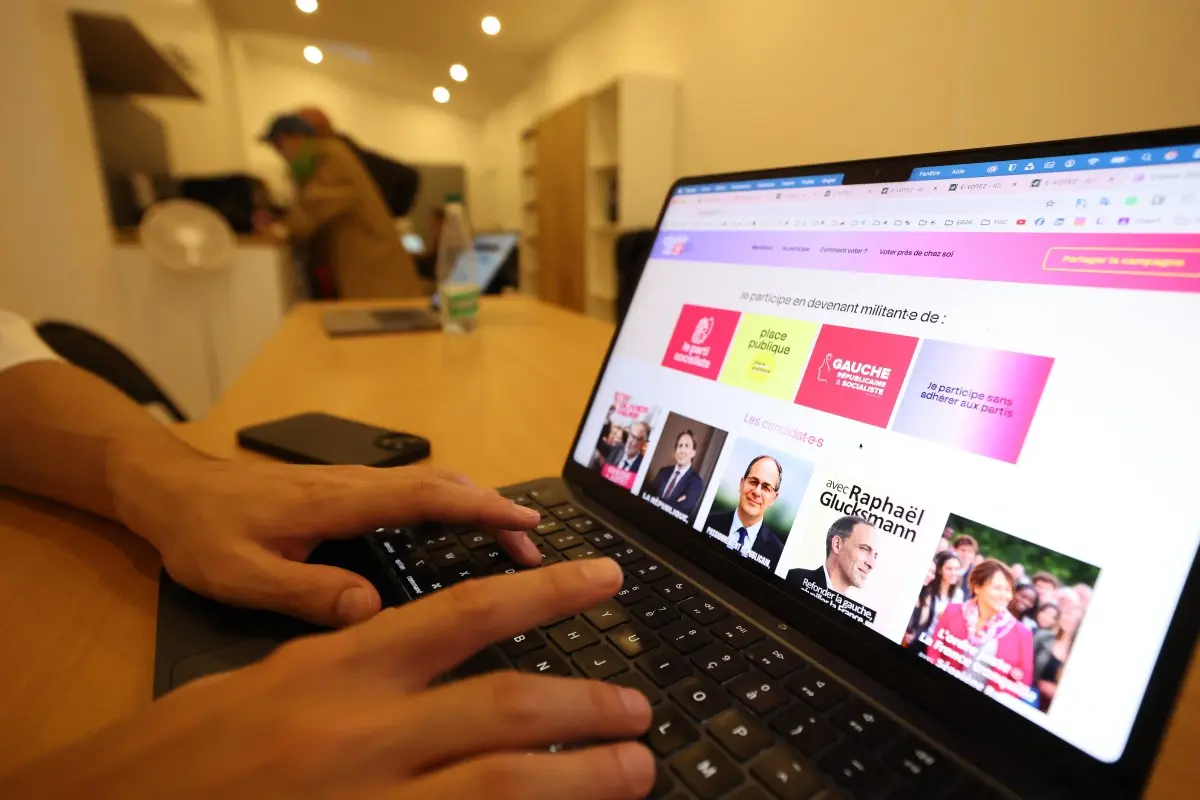
Socialist primary
When their candidate won just 1.75 percent of the vote in the 2022 presidential election, the venerable Parti Socialiste probably didn't think things could get much worse for them. It was a crushing humiliation for the party that dominated French politics as one half of the duopoly of the second half of the Twentieth century and which produced presidents François Mitterrand and François Hollande.
But this week, things got even worse.
We now know that the party will not field a candidate in 2027, the first time this has happened since the beginning of the Fifth Republic in 1958.
The reason for this is the 'primary of the united left' - intended to whittle down the many, many potential candidates in order to avoid splitting the left vote. In the end, it was not quite so united; going ahead without any of the candidates of the hard left (either La France Insoumise's Jean-Luc Mélenchon or the various ex-LFI members who have announced presidential bids), nor the Greens nor the Communists.
It was a primary of the centre-left/democratic socialists, and Parti Socialiste leader Olivier Faure was convincingly beaten into second place by Raphaël Glucksmann, an MP in the European Parliament who co-founded the centre-left party Place Publique in 2022.
As far as policies go, his aren't that far apart from PS, so perhaps they can console themselves that their ideas are being represented at the polls, but to go from one of the Big Two to being beaten in a primary is a very humiliating fall.
And did the primary of the left succeed in reducing the number of potential candidates? Well, not really - Who's running in France's 2027 presidential election race
Glucksmann is operating in the political space between the Macronist/centrist candidate and the hard left Jean-Luc Mélenchon, but it seems that he may not even get that fairly narrow space to himself, with a planned primary between the Green leader and another hard-left candidate.
Oh, and he was enfariné (had flour chucked over him) within minutes of the announcement of his victory on Sunday evening . . .
Bunch of bankers
Naturally, Glucksmann's political rivals offered the traditional gritted-teeth congratulations.
Below is a parody account sketching out how the conversation might have gone over at the Rassemblement National HQ, Marine Le Pen telling her deputy Jordan Bardella, 'Congratulate Glucksmann on his victory but keep it low-key OK?'.
To which he replies 'Glucksmann, that's a banker's name, right'? Marine responding 'shut up Jordan'.
- Tu fais un petit discours, tu félicites Glucksmann pour sa victoire mais tu restes sobre OK ? - Glucksmann, ça fait un peu nom de banquier ça non ? - Ta gueule Jordan
— Nini_MacBright (@ninimacbright.bsky.social) 11 October 2026 at 20:59
[image or embed]
This is, of course, a reference to the ongoing antisemitism scandal that Jordan Bardella is embroiled in.
The French investigative outlet Mediapart published messages from 2013 in which a young Jordan Bardella wrote extreme antisemitic comments. They let him spend a couple of days denying everything, then published their evidence, which includes server logins, account details and cross-references between Bardella's other social media accounts showing identical posts, even down to the spelling mistakes.
One comment that was posted on both Jordan's Twitter account and the antisemitic account, which he denies is his, was the 'revelation' that a young cabinet secretary by the name of Emmanuel Macron had previously worked at the Rothschild Bank, an institution that has long been the target of antisemitic conspiracy theories.
Far right infighting
It probably shouldn't come as too much of a surprise that a young man who joined a party founded by a Holocaust denier and a former member of the SS should have had - at least at one point in this life - antisemitic views.
And it doesn't seem to have surprised the French, a recent poll showed that 72 percent of them have not changed their views of Bardella as a result of Mediapart's scoop. Of course that includes people who always thought he was a hate-filled bigot anyway, but it does seem to suggest that the revelations have not substantially dampened support for the party.
Jordan seems to be trying to simply ride this out, he has announced that he will take legal action, but via a pathway that means his case is unlikely to be heard before the election.
Since Marine Le Pen succeeded in persuading a court to shorten the election ban imposed after her conviction for embezzlement, Bardella is no longer the RN candidate. The party had previously spoken of a dual ticket with Le Pen as the presidential candidate and Bardella as her prime minister.
These suggestions have notably dried up in recent weeks, with increasing reports of a rift between Le Pen and her protégé. In fact, the most likely source for those damming antisemitic chats is someone within the party who has decided that now is the time to release them to the media.
Polls latest
France is a country that loves polls, even outside election periods, there are regular polls on voting intentions, and pollsters like to test all possibilities (during the 2022 campaign one clearly-bored pollster even tested Emmanuel Macron versus a hypothetical raised-from-the-dead Napoleon Bonaparte).
The polls come in two parts - first round voting intentions and then the options for the second round, where voters are asked to choose between various combinations for the two-person second round run-off.
READ ALSO: EXPLAINED: How France's two-round voting system works
The second round polls are always the ones to watch, this time, Marine Le Pen's first-round polling numbers are so strong that virtually all second-round scenarios tested are her against a candidate from either the centre-right, centre or left.
A YouGov poll taken on September 21st shows;
- Le Pen v Gabriel Attal (centrist) - 57-43
- Le Pen v Raphaël Glucksmann (centre left) - 59-41
- Le Pen v Jean-Luc Mélenchon (hard left) - 64-36
- Len Pen v Édouard Philippe (centrist) - 55-45
It's not exactly a cheerful picture for those who don't like the idea of a Le Pen win, but there are two small positives; the first is that Le Pen has for years over-performed in the polls and shown fewer votes in actual elections.
The second is that Le Pen was the first declared candidate while her various rivals squabbled among themselves, it is expected that as the field narrows and credible opponents emerge, her lead will narrow slightly.
This is our French Presidential election column, which we will be publishing weekly between now and the election in April and May 2027 (maybe with a break over Christmas so we can all eat ourselves into a coma and briefly forget about French politics). To receive it as an email, just go to your newsletter options and subscribe to '2027 presidential race'.
Comments