

Inside France is editor Emma Pearson's weekly look at some of the news, talking points and gossip in France that you might not have heard about. It’s published each Saturday and members can receive it directly to their inbox, by going to their newsletter preferences or adding their email to the sign-up box in this article.
The Bardella affair
I had a blissful break from French politics last week, while visiting a mechanical elephant (more on him later) but it's back with a bang this week with the revelations of some particularly grim anti-Semitic comments alleged to have been made by the far-right leader Jordan Bardella, back in 2013.
The revelations of the comments made in private chat groups first appeared in the French investigative outlet Mediapart, which has broken some major stories in recent French political history. Bardella says the claims are untrue and has filed legal action.
So what was happening in French politics back in 2013?
Bardella himself was 17 or 18 years old but already a committed party activist, he had joined the party the previous year and would soon drop out of his degree in order to work for them full time.
The party itself was at that point still the Front National - it would change its name to Rassemblement National in 2018 - but Marine Le Pen had taken over the leadership from her father, the convicted Holocaust denier Jean-Marie Le Pen, in 2011 and was just beginning what would become her defining project, that of dédiabolisation.
This 'detoxifying' of the party has been remarkably successful in electoral terms, taking it from a fringe party to the second-largest French parliamentary bloc and one that has a commanding lead in the polls for next year's election - but those who pay attention to French politics have always warned that the change is purely cosmetic and it remains at heart a racist party.
That's why the utterances of the teenage Jordan are more important than they might have been for another politician, and why the party's origins and roots are key.
The young Bardella joined an openly racist party whose co-founders included a convicted Holocaust denier, a former member of the SS and supporters of the pro-fascist Vichy regime.
Frankly, I think I would find it more surprising if he hadn't been making anti-Semitic comments at that time.
Mais qui a fait ça ? Je pleure de rire 😭 Merci l'internet ❤️
— Sophie Tlk (@sophietlk.bsky.social) 28 September 2026 at 23:46
[image or embed]
France has a long and ugly history of anti-Semitism. I'm writing this in The Local's Paris offices, just a few hundred yards away from La Villette - these days a cool entertainment complex but formerly the city's slaughterhouse district, which provided many of the 'shock troops' of the anti-Dreyfus movement, essentially militias or mobs who conducted anti-Semitic street violence during the Dreyfus Affair of the late 19th century.
And much as we might wish it, this kind of hatred is not confined to the past. Nor is it confined to the far right in modern French politics - Jean-Luc Mélenchon, leader of the far left La France Insoumise, was embroiled in his own anti-Semitism scandal earlier this year.
Lycée
But Bardella is not the only teenager/politics intersection this week - French pupils have been staging blockades at their lycées (high schools). Beginning in the greater Paris region, the action rapidly escalated and spread across the country with its scale and, in some cases, violence appearing to take the government by surprise.
Many of the teenagers protesting have genuine grievances about their schools, including large class sizes, a lack of substitute teachers and, in some areas, crumbling infrastructure and decrepit school buildings.
But the protests seem to have rapidly spiralled into a more widespread expression of anger, with violence, vandalism and arson in some areas - the government is blaming 'infiltrators' from the hard left La France Insoumise, citing security sources. Meanwhile, some truly disturbing photos and videos are circulating, showing police manhandling and, in some cases, appearing to beat the students, who are mostly aged between 15 and 18.
Is this a sign of things to come as the political atmosphere becomes ever more intense?
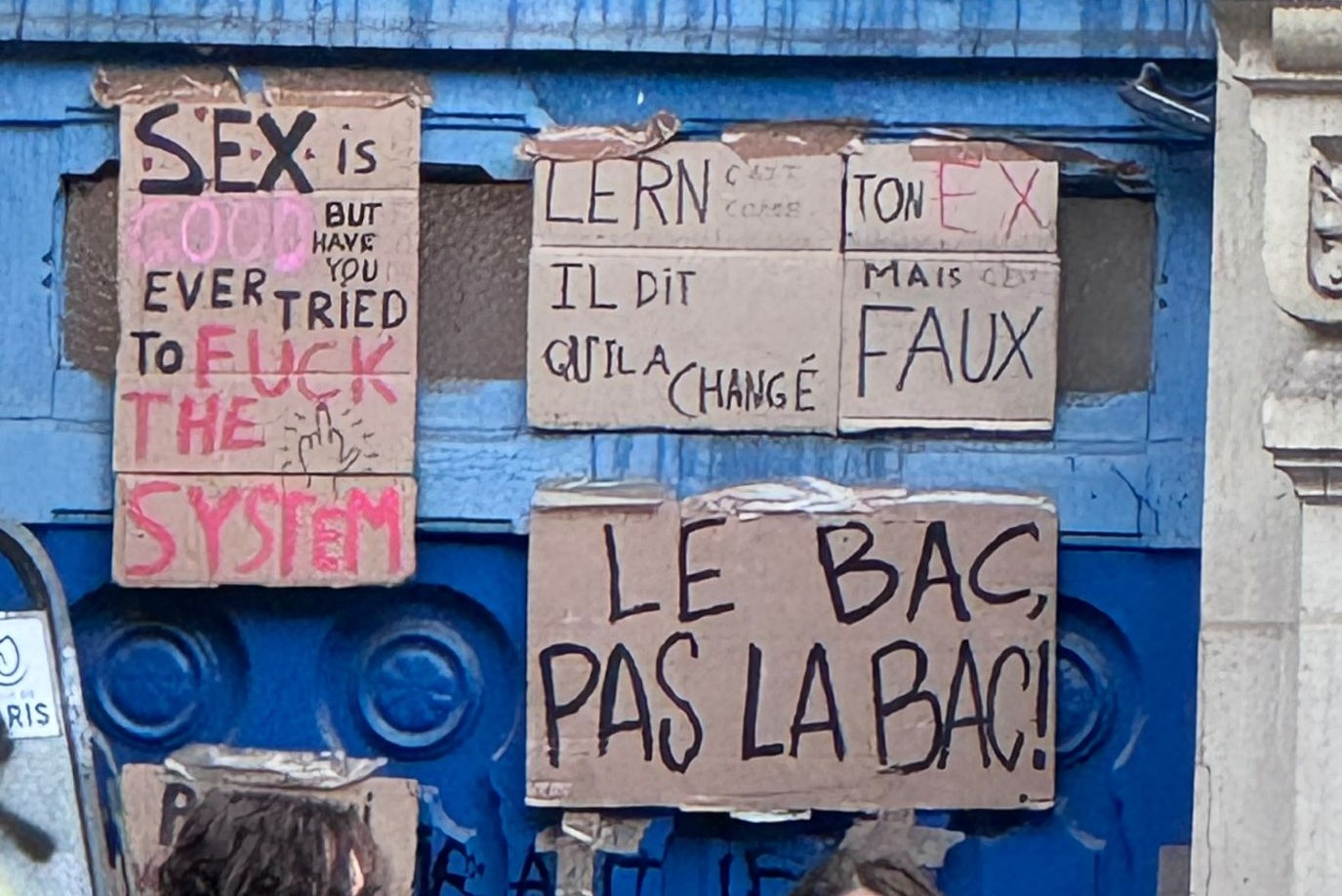
And neatly tying together those two news stories is this, spotted at a Paris lycée on Friday - the top right sign reads 'le RN, c'est comme ton ex - il a dit qu'il a changé mais c'est faux' - Rassemblement National is like your ex who says he'll change, but he wont'. Also impeccable use of English for the top left sign - 10/10 kids, well done.
The elephant in the room
But back to the mechanical elephant . . . Yes, I was visiting the delightfully quirky French town of Nantes, in which the enormous elephant walks around the town spraying people with water and carrying visitors on his back. He was created by Les Machines de l'Île, which is a definite must-see for tourists.
I was never going to dislike a town which displays such a sense of fun, but Nantes is packed with interesting and enjoyable things for visitors to do.
It also, in my opinion, does an outstanding job of grappling with the darker side of its past, namely as France's leading slave trade port. From memorials and plaques to the excellent town museum and the artists who engage with postcolonial themes, I think it strikes the perfect balance between in no way trying to erase or forget its history, while also acknowledging the horrors of the slave trade and its lasting impact on the world.
READ ALSO: How France’s former slave ports are confronting their past
Bad French pun of the week
And if all that wasn't enough, Nantes is also the home of LU biscuits, which gives rise to the decorative tower at the former Lefèvre-Utile factory and this terrible, terrible pun/wordplay which the town is clearly very proud of . . .
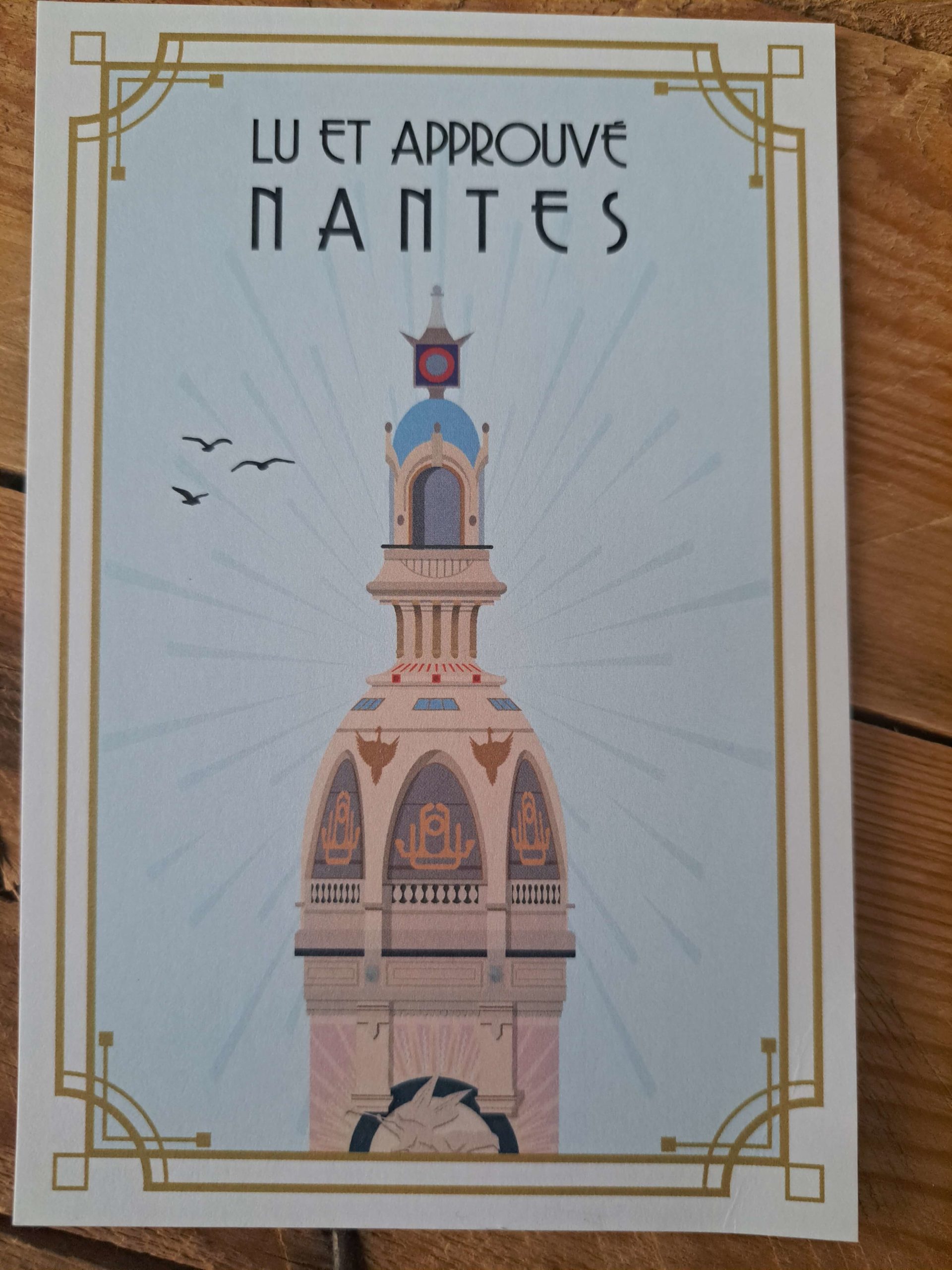
As all those who have ever signed a French contract will know, lu et approuvé (read and approved) is the phrase that you must write on each page before initialling it. In Nantes, however, we are LU and approved . . .
Bon weekend !
Inside France is editor Emma Pearson's weekly look at some of the news, talking points and gossip in France that you might not have heard about. It’s published each Saturday and members can receive it directly to their inbox, by going to their newsletter preferences or adding their email to the sign-up box in this article.
Comments