
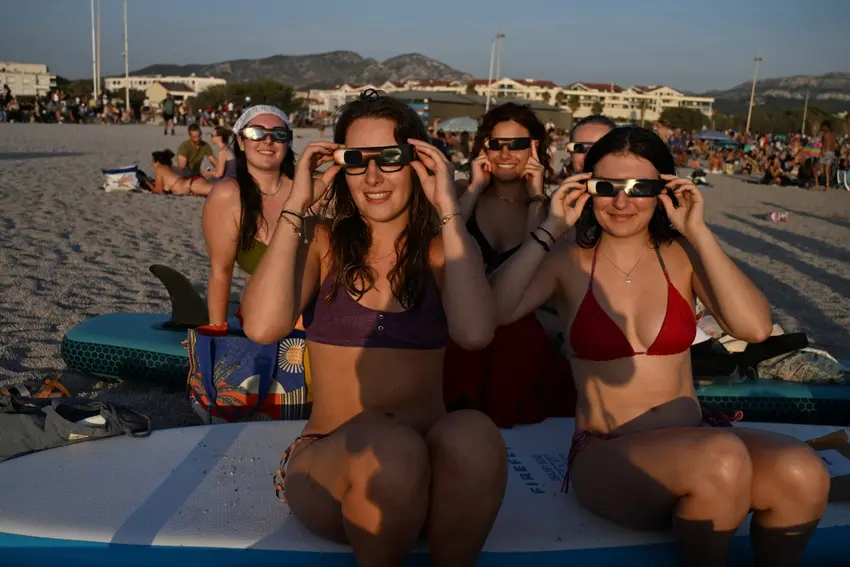
The eclipse - a first in mainland Europe since 2006 - cast its shadow through parts of Greenland, racing south to smother Keflavik, some 50 kilometres from Iceland's capital, Reykjavik, before arcing across the Atlantic Ocean towards northern Spain.
In France the eclipse was only partial, with the sun 99 percent obscured in the Basque Country, 92 percent in Paris and 90 percent in north east France.
But that did not stop tens of thousands of people from turning out to watch, creating a festival atmosphere in parks and viewing spots across the country.

Supplies of special viewing glasses were in high demand with long queues at pharmacies and opticians on Wednesday afternoon.

On the summit of the Pic du Midi, in the French Pyrenees, heavy clouds parted minutes beforehand, allowing visitors to see the spectacle, which also drew crowds in Paris, Marseille and dozens of French towns.

Throughout human history, eclipses have stirred amazement, fear and reverence, as they appear to momentarily halt the normal course of nature.

The shadow or "umbra" cast by the alignment of Sun and Moon creates a strange twilight during which temperatures drop, shadows appear at strange angles and some animals go to sleep.
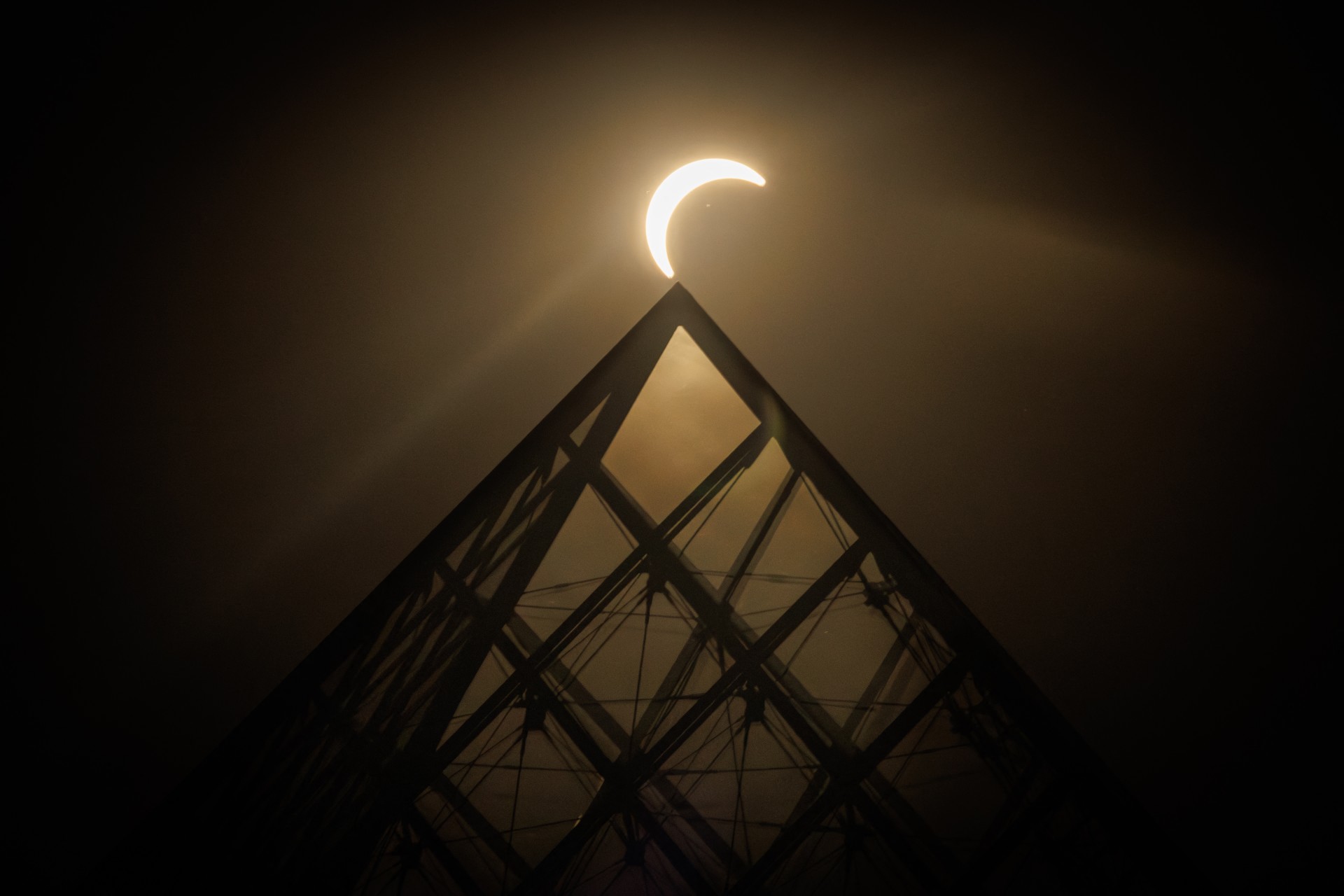
But the phenomenon is fleeting, lasting just minutes, with the lunar shadow moving across the surface of the Earth at some 3,430 kilometres per hour, according to the Paris Observatory.
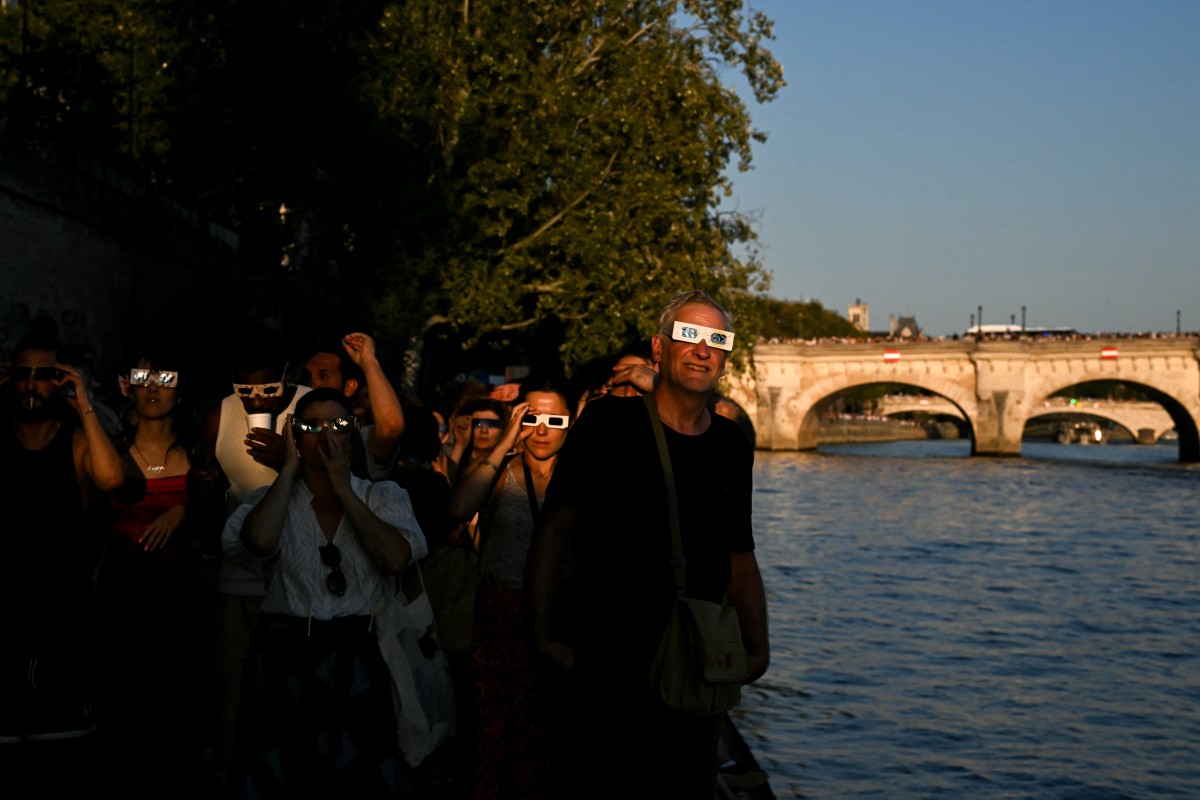
The partial eclipse - which occurs as the Moon starts and finishes crossing the Sun's path, dimming its light - lasted around one hour and 45 minutes.

The event, livestreamed by both NASA and the European Space Agency, presents scientists with a rare opportunity to study the Sun's atmosphere and its outermost layer, as they seek to uncover secrets about solar winds and our star's magnetic field.

Another total eclipse will cross southern Spain and northern Africa in August 2027, while an annular eclipse - when the Moon is not big enough to completely blot out the Sun, creating a so-called "ring of fire" - is due to visit the Iberian Peninsula in 2028.

Comments