
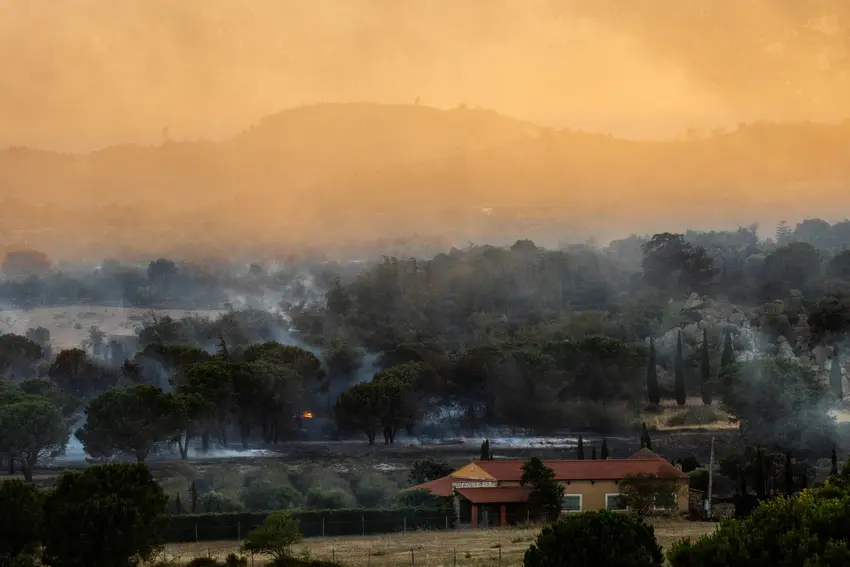
Here's what you should know during France's wildfire season - from how to stay informed to what to do in the case of a fire.
What does a wildfire warning mean?
How can you help prevent forest fires?
Authorities estimate that around nine out of ten wildfires are caused by human activity, often accidentally.
Fire prevention advice includes: using barbecues only in authorised areas away from dry vegetation, never throwing cigarette butts on the ground or from a vehicle, avoiding carrying out outdoor work that could generate sparks near dry grass or woodland, and consulting local authorities before heading into forested areas.
READ ALSO: Wildfire prevention: The legal obligations for French property owners
What should you do if a fire starts?
If you spot a fire, call emergency services immediately on 112 or 18, or 114 for people with hearing impairments. Give the most precise location possible, move away from the fire and follow instructions from emergency services.
If evacuation is not possible, authorities advise taking shelter inside a cleared building. Emergency officials warn that a car is not a safe refuge during a wildfire because it can become trapped by flames.
Check local restrictions before visiting forests
During periods of elevated fire risk, préfectures may impose temporary restrictions.
This includes restricting or prohibiting access to forests and woodland, banning barbecues, fireworks and open flames, limiting agricultural, forestry or construction work that could create sparks and restricting the use of machinery such as brush cutters, shredders, chainsaws or welding equipment.
Be aware that failure to comply with wildfire prevention rules can result in a fine of up to €750.
Visitors are also advised to check the website of the préfecture in their destination département before travelling.
France waiting for new firefighting aircraft
France has ordered additional Canadair water-bombing aircraft as part of efforts to strengthen its response to increasingly frequent wildfires.
However, the first deliveries are not expected before 2028, meaning civil protection services will tackle the 2026 summer season with broadly the same aerial resources as last year.
The national fleet currently consists of 26 aircraft and 10 water-bombing helicopters, which can be deployed across the country. France also regularly shares firefighting resources with neighbouring countries in case of a large blaze.
READ ALSO: French government expands obligatory wildfire prevention work for homeowners
Comments