
The technique of using X-rays to sterilise the male mosquitoes and then releasing them into the wild is a new way to try and control the mosquito population, which has increased sharply in recent years due to warming temperatures and increasing immunity to pesticides.
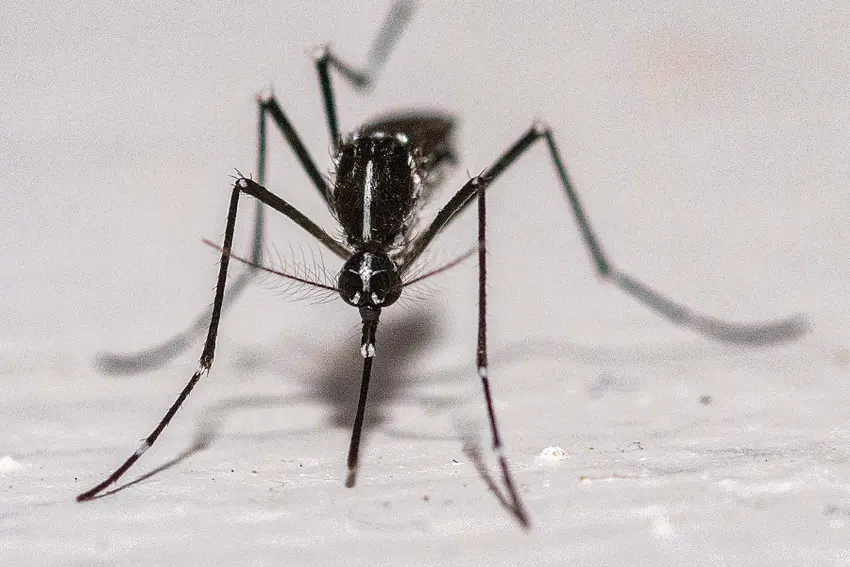
Tiger mosquitoes, originally native to Asia, have been gradually spreading north through France over the last decade and can now be found across the country - the black-and-white striped insects can spread potentially fatal diseases such as Zika, dengue fever and chikungunya.
The release will be conducted from the beginning of May in the commune of Mions, in the Lyon suburbs, which has tracked a significant increase in mosquitoes over the past decade and is unable to control them using traditional methods.
READ ALSO: MAP: Tiger mosquitoes found in 81 of 96 départements in France✎
The X-ray technique was developed by Terratis, a company in Hérault, southern France, and involves rearing male mosquitoes in the laboratory and then using X-rays to make them sterile. They are then released into the wild, where the idea is that they will mate with female mosquitoes who will then lay sterile eggs, cutting the overall population.
The Mions local authorities will release 200,000 males between the start of May and the end of the summer, with the goal of halving the mosquito population within a year.
The town in Brive in Corrèze, central France, experimented with sterile male mosquitoes last year and said it has seen a "noticeable drop" in numbers of the insects.
Comments