
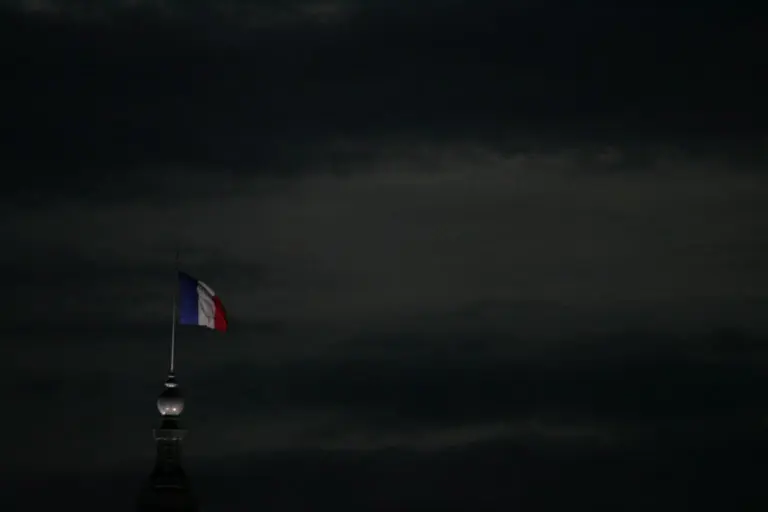
After burning through three prime ministers in 10 months, France is in a dark place. It may get darker.
The country is in a mess and it is a mess with no obvious solution.
Another parliamentary election? That is now likely. Opinion polls suggest that it would merely rearrange the wreckage of French politics in favour of an incompetent and clueless Far Right without producing a clear winner.
Another prime minister? There is no reason to believe that he or she could solve the puzzle that has defeated Michel Barnier (September to December 2024), François Bayrou (December 2024-September 2025) and now Sébastien Lecornu (September-October 2025).
The National Assembly is poisonously divided into three and a half mutually-detesting blocs and eleven self-serving groups. How to find even a passive majority willing to confront France’s €3.4 trillion debt crisis?
The last man to try, Sébastien Lecornu, was defeated by the intransigence of his Socialist opponents, the self-regarding stubbornness of his centre-right allies and the inflexibility of his own camp. He resigned on Monday after only 27 days as Prime Minister.
His predecessors were pushed of the cliff by a hostile Assembly; Lecornu jumped first.
A solution was possible, he said in a dignified farewell speech on Monday; we came within touching distance of a budget deal; but too many French politicians regard compromise as failure; too many people - including some of his supposed pals - were more fixated on the 2027 Presidential election and appeasing their narrow electorates, than saving the nation from a towering financial crisis.
READ ALSO: What next for France as PM resigns after less than a month in the job?✎
Lecornu has been given until Wednesday evening by President Emmanuel Macron to identify a way forward for new negotiations by another PM. Otherwise, the President says that he will “take his responsibilities” - in other words call a new election.
Macron is using the threat of electoral calamity to persuade the Socialist and the centre-right to dismount their high horses. But a new election might also be a wipe-out for his own Centrist camp.
Is he prepared to be more flexible himself? Will he submit to the Socialists’ pig-headed demand for a new debate on his flagship 2023 pension reform?
Maybe. I doubt it. We are probably heading into new parliamentary elections in November.
Another possible solution would be the resignation of President Macron. His successor would hope to win a parliamentary majority after his or her election and end the gridlock in the Assembly. All new Presidents of the Fifth Republic have been given that second vote of confidence by the voters. History might repeat itself.
Or it might not. In the old French political game, two teams of broad left and right competed; that seems to have been replaced by a game between three teams (at least) of splintered left, divided centre and expanding far right. Clear victories may be a thing of the past but French political minds are still programmed to winner-takes-all.
In any case, President Emmanuel Macron – who deserves some of the blame for the present crisis but not ALL the blame – is no Sébastien Lecornu. Dignified resignation is not in his DNA. He will tell himself that abdication is not part of the monarchical tradition of the Fifth Republic. He will conclude that Trump- Putin-Netanyahu World is already too dangerous a place to risk a President Jordan Bardella.
So where DO we go next?
It is just possible that Macron’s threat of an election will concentrate giddy minds. He may decide that there is scope to appoint yet another Prime Minister, either an elder statesman or stateswoman or someone from the moderate Left.
More likely, he will call a new parliamentary election.
If the Far Right wins a majority, they will be confronted with their own refusal to accept the reality of France’s deficit and debt crisis. Their quack remedies – cut EU payments, stop immigration – are ideological slogans. Their figures don’t add up.
Marine Le Pen wants to spend more money on social policy; her de facto deputy Jordan Bardella wants to cut taxes. Unless they zig-zag dramatically, they will allow the deficit to swell. A market crisis, and an explosion in France’s cost of borrowing, is likely.
If the new National Assembly is as splintered as the old one, we will return to the old quagmire. There will be no budget deal. A market crisis, and an explosion in France’s cost of borrowing, will be likely.
Whatever happens, there is now too little time to negotiate and pass a 2026 budget by December 31st. For the second year running, France will enter the new year with an emergency roll-over budget which will also allow the deficit to swell.
France reminds me, I grieve to say, of the Greece I visited several times at the start of the financial crisis in 2008. Everyone was responsible for the problem; everyone blamed everyone else.
I fear that nothing will change before the presidential election in 2027 - and maybe not even then.
France is in a dark place. It may get darker.
Comments (4)