
After many delays, the EU's new EES border control system began to be rolled out across Europe on Sunday, October 12th.
The system is essentially an enhanced border control that is applied at the EU/Schengen zone's external borders - it is not applied on a trip between two EU countries, eg between France and Spain.
It affects only people who are travelling on the passport of a non-EU/Schengen country and there are other exceptions too, including non-EU citizens who are resident in an EU country.
The main group affected will be tourists and people coming to France for a short visit.
You can find the full explanation of how it works, and who is exempt, HERE.
Start dates
One of the reasons that the introduction kept being postponed was worries that countries were not ready and the system would be chaotic and lead to long queues at the border.
Of particular concern is the UK-France border, since this the EU's busiest external border and has the added complication of juxtaposed border controls at key points including the Port of Dover and the Eurostar terminals.
It was for this reason that the EU opted for a phased introduction with checks being introduced gradually over a six-month period. That means different ports, airports and entry points are starting the border checks at different times and not all travellers are being put through the EES checks from the start.
The latest update from the European Commission reveals that at present, countries are required to do EES checks on 35 percent of people arriving.
That will rise to 50 percent on March 10th, and then to 100 percent by April 10th - although ports and airports will still be able to temporarily suspend the checks if there are very long queues.
Speaking at the European Parliament home affairs committee, Henrik Nielsen, Director for Schengen, borders and visa at the Commission, added that in April the stamping of passports will also end and an online tool will become available for travellers to check how many days of the 90/180 allowance they have used.
It is up to each country within the block to decide how to implement the checks, and how to reach the targets for passengers checked - some are phasing it in at all entry points, while others have decided to introduce it via transport type (for example at airports first, then at train stations).
Here's the situation in France;
Airports
October 12th - some airports. When it comes to airports in France, EES is being introduced gradually and then expanding out to cover all passengers over the next six months.
France's larger airports now have kiosks to allow for EES pre-registration in place - between them Paris' Charles de Gaulle and Orly aiports have installed 320 self-service kiosks for pre-registration. However passengers are being directed to them on a gradual basis - so you may or may not be invited to use them, depending on the passenger flow within the airport.
For the first six months, airports will continue with passport stamping while the EES kiosks are gradually rolled out.
The following airports have EES pre-registration kiosks in place;
- Paris-Charles de Gaulle
- Paris-Orly
- Bâle-Mulhouse
- Paris-Beauvais
- Bordeaux
- Lyon
- Marseille
- Montpellier
- Nantes
- Nice
- Strasbourg
- Toulouse
The other airports, generally the smaller ones, will direct passengers to the manned border checkpoint, where the border guard will collect and register the required information.
By April 10th 2026, EES registration should - if all goes according to plan - be in place for all passengers coming through French airports.
Passengers who are exempt from EES pre-registration - including non-EU citizens who live in France or another EU/Schengen zone country with a residency permit or visa - are invited to skip the EES pre-registration kiosks and go directly to passport control.
Remember that you only need to complete the pre-registration (questionnaire plus fingerprints) on your first crossing of an EU external border after the introduction of the system. On subsequent trips the checking process is quicker (unless you have just got a new passport, in which case you will need to complete the registration again).
Eurostar
October 12th - premier and carte blanche customers, on a voluntary basis. Eurostar operators say from October 12th only premier class passengers and carte blanche members (the Eurostar frequent travellers' club) will be asked to complete EES registration. This will initially be on a voluntary basis - although if you are a frequent traveller it's probably worth saying yes and getting the registration done while it's still comparatively quiet. This will be rolled out simultaneously at Paris Gare du Nord, London St Pancras, plus Lille and Brussels.
Phase two - the expansion of checks to everyone else was initially intended to be January 12th.
However Eurostar says it is awaiting the green light from French border control to begin this phase. The start date remains TBC.
First-time visitors non-EU visitors will have to provide biometric details, including fingerprints and a facial scan, complete a short questionnaire and scan their passports. Once non-EU travellers are registered then only minor EES checks will be required the next time they pass through a EU/Schengen external border.
More details here.
Eurotunnel Le Shuttle
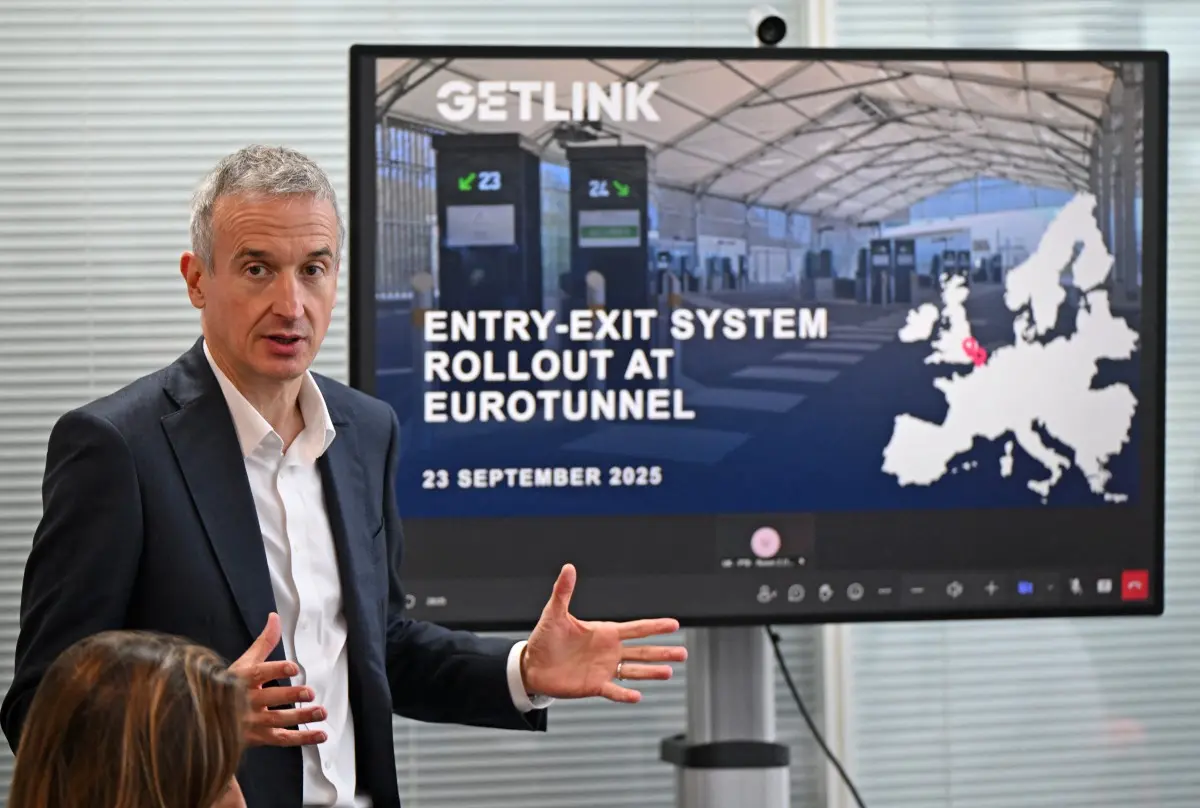
October 12th - coaches and freight. Channel Tunnel operator GetLink confirmed that the first phase of checks will affect only passengers on coaches, and freight.
Start of 2026 - all other passengers. Originally planned for December 2025, checks are being expanded to other passengers from the start of 2026. There will also be a phased introduction, with the target for it to apply to everyone by April.
At present, some passengers will be asked to complete it while others wont.
Eurotunnel has invested €80 million in the new EES infrastructure and terminals in Folkestone and Coquelles will be able to process up to 550 vehicles per hour, “accommodating approximately 1,500 passengers”.
It is not expected that there will be major issues with congestion at Eurotunnel terminals.
In fact Eurotunnel CEO Yann Leriche said: "Anyone who is not ready is not because it was impossible or a huge challenge . . . they are just saying they didn’t do a good job."
Port of Dover
October 12th - coach parties. From October 12th coach travellers arriving at Dover will have to go through the purpose-built Western Docks processing area. Passengers will disembark to register at special EES kiosks, go through passport control in a new hall, and re-board the coach, which will be sealed and driven onwards to the ferry terminal.
Early 2026 - everyone else. The registration will be extended to all passengers at the start of 2026, delayed from November 2025 at the request of French border control.
The Port says there are currently 72 self-registration kiosks available for car passengers, but at present not everyone is required to use them, as the port too is working on a phased introduction until April.
The phased introduction allows operators to temporarily suspend registration during the six-month introduction period if long queues are building up. The Port of Dover has long been the source of serious concern, and has struggled to cope ever since Brexit, when border guards were required to start passport-stamping at the port.
At peak travel times, especially during the summer holidays, Dover has often been the scene of long queues, with traffic congestion affecting nearby roads and the town of Dover itself.
Port of Calais
October 12th - checks will start only for freight traffic, and for coach passengers.
November-April - the port is 'progressively' expanding checks until they are at 100 percent checks by April 10th, 2026.
The process will be broadly the same as at Dover, with staff handing over a tablet computer for car passengers to complete their registration - passengers who have a residency card in France or another EU country should show it to the member of staff who hands over the tablet, and will then be exempt from the registration process.
The Port of Calais has not seen the same level of difficulty as Dover with post-Brexit checks, and there are not expected to be major issues with EES introduction.
Other cross-Channel ferry ports
Although Dover-Calais is the main cross-Channel ferry route, there are others including Newhaven-Dieppe and Saint Malo-Poole.
They began checks on October 12th, but only for a small minority of passengers.
There are not expected to be major issues at these ports due to a smaller volume of traffic and the lack of the juxtaposed border controls seen at Dover and Calais.
If you have crossed into France since October 12th 2025, feel free to share your border experience in the comments section below

Comments (4)