
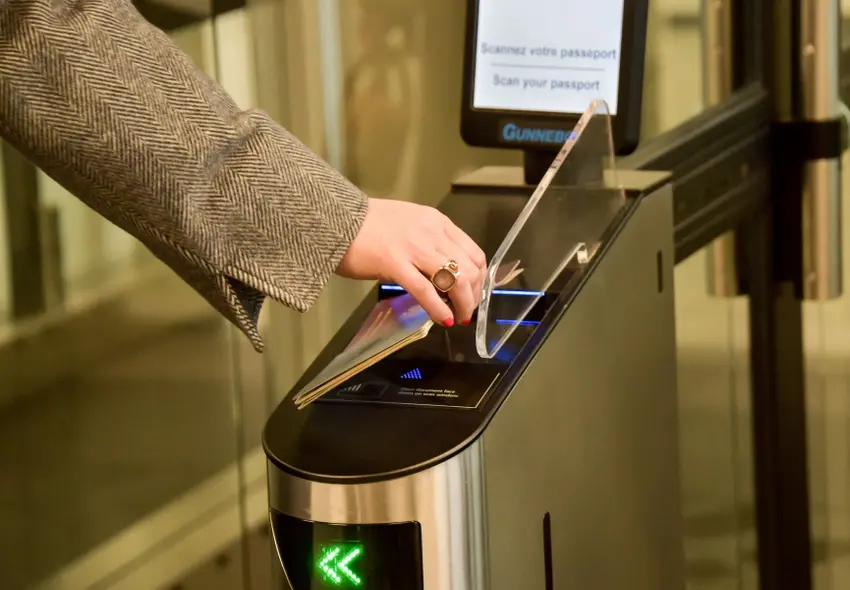
The EU's Entry & Exit System is a new way of checking passports at the EU/Schengen zone's external borders, and it is due to come into effect from October 12th. Full details on what it is and how it works here.
The system has a phased approach, with entry ports gradually rolling it out from the middle of October, with the target of having it entirely up and running for all passengers by spring 2026.
READ ALSO: Dover and Eurotunnel reveal start dates for new EES passport checks
Not everyone is required to complete the EES registration - you can find the full list of exemptions here, but the biggest groups who are not required to go through EES checks are EU citizens, plus non-EU/Schengen citizens who are legally resident in an EU/Schengen country.
The European Commission confirmed to The Local way back in 2022 that EES does not apply to non-EU citizens who are living in France, telling us: "Non-EU national holders of residence permits are not in the scope of the Entry/Exit System and ETIAS. More about exceptions can be found on the website.
"When crossing the borders, holders of EU residence permits should be able to present to the border authorities their valid travel documents and residence permits."
What was unclear at the time, however, was exactly what non-EU residents of France should do when arriving at the port/airport/station.
We now have more information on that;
EU citizens - if you have citizenship of an EU or Schengen zone country, then congratulations, things will be a lot easier for you. All EU/Schengen citizens are exempt from EES checks, so simply go to the EU passport gate and proceed as normal.
One very important note for dual nationals - in order to benefit from this, you must be travelling on your EU/Schengen passport. You cannot benefit from the exemption if you are using your non-EU passport. Naturally, your EU passport must be valid and within its expiry date.
READ ALSO: Travel to France: Your questions answered about EES and ETIAS
Non-EU citizens - if you have either a French carte de séjour (residency permit) or a visa, then you are exempt from EES. The exception to this is people who have the Schengen visa - the visa required for citizens of some countries for visits of up to 90 days - this group is not exempt from EES.
It's advised to travel with your carte de séjour in order to prove that you are exempt (if you were waiting for the card to be renewed, you can use the recépissé as proof of your residency status). Visa holders will have the visa in their passports.
Port of Dover - if you are taking the ferry, there will be a special area that cars will be diverted to in order to complete EES formalities.
Authorities at the port said that passengers exempt from EES should skip the EES checks and "go directly to the Border to be processed."
Eurotunnel - likewise, Eurotunnel terminals at Folkestone and Coquelles will have a special area to complete EES checks.
Eurotunnel also told The Local that those exempt from EES checks (EU/Schengen nationals, residents in EU/ Schengen states) would simply avoid going through the EES registration area and proceed directly to the border.
"When the vehicle arrives at the terminal, all passengers, regardless of status, check in at the kiosk. If identified as EU citizens, the vehicle will continue its journey without entering the EES biometric data area," the spokesperson said.
Airports - at the time of writing, the French Interior Ministry is still finalising the exact phased entry dates for French airports.
Airports present a different problem for French residents, since they largely use automated passport gates, which cannot record both a passport and a residency permit.
The French Interior Ministry has previously confirmed to The Local that people who have either a French visa or a carte de séjour should not use the automated gates - instead, they should go to a manned gate and present their passport and residency papers together. It's not clear whether or how these will be signposted.
Eurostar - the Eurostar terminals at Paris Gare du Nord and London St Pancras also use automated passport controls, although at present these only scan the passport itself, while enforcement of passport stamping is done by humans, giving the option of presenting both a passport and a residency permit.
It is not clear at this stage exactly how this will work after the introduction of EES. The Local has asked for clarity on this point.
Why are long-stay visa and residency permit holders exempt?
The main aims of EES are to improve border security and tighten up enforcement of the 90-day rule - the rule that limits non-EU nationals to 90 days out of every 180 within the EU/Schengen zone.
READ ALSO: How will the EU's new EES passport checks affect the 90-day rule?✎
People legally resident in France are obviously not covered by this restriction.
At present, the rule is enforced through the slightly haphazard system of passport stamping - EES will do away with passport stamping, although during the phased introduction phase, the two systems will work concurrently.
A Commission spokesman said: "EES is an automated IT system for registering non-EU nationals travelling for a short stay, each time they cross the external borders of European countries using the system (exemptions apply, see FAQ section).
"This concerns travellers who require a short-stay visa and those who do not need a visa. Refusals of entry are also recorded in the system. Non-EU citizens residing in the EU are not in the scope of the EES and will not be subject to pre-enrollment of data in the EES via self-service systems."
Comments (2)