
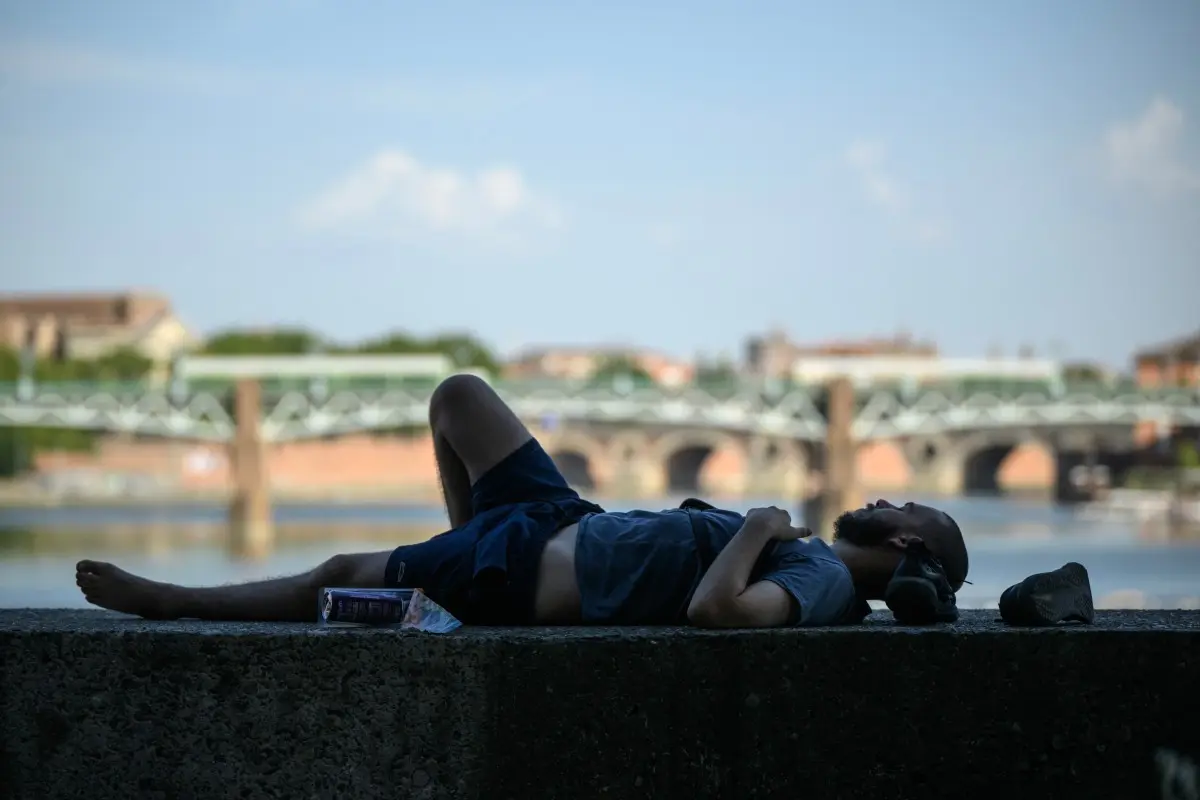
The first nationwide heatwave of 2025 in France brought with it sleepless nights, a lot of sweaty people - and a fierce political debate on air conditioning.
In a nutshell, Marine Le Pen's Rassemblement National - a party extremely reluctant to even discuss the climate crisis that is making French heatwaves longer, hotter and more intense - wanted to introduce a "grand plan for air conditioning".
But the politicians of the left and the centre - and a large chunk of the population - are resisting this one-size-fits-all solution.
One year on, and we're already into our second heatwave of the summer and it isn't even July yet.
Coming from a generally cold and rainy country (the UK), I'm culturally conditioned to regard all warmth and sun as "lovely".
After a few summers in Paris - including the record-breaking heatwave of 2019 - I came to the realisation that actually heatwaves can be very scary indeed. For some they can be fatal, but even for those of us fortunate enough to be in good health and have somewhere to live and an indoor job they move well beyond simply uncomfortable.
The "tropical nights" that make sleep virtually impossible, the burning heat on exposed pavements, the public transport where temperatures rise to sauna heat, the spiking pollution levels that make the air thick and soupy, the general lassitude and bad temper from days on end of feeling simply too hot - being in a city in a heatwave is no fun.
Especially a city like Paris that is simply not designed for hot temperatures - even the streets in the city centre are deliberately designed not to offer a through breeze (the thinking being that you don't want icy gales in the winter).
READ ALSO: In Maps: The five worst French cities to spend a heatwave in✎
But even taking all the above into account, the French are still right to shun air conditioning.
Let's have some caveats here - for those in high risk groups, air conditioning can be vital. In fact it has been law for almost 20 years that Ehpads (nursing homes for the elderly) must have some air conditioned rooms. City authorities also offer air conditioned "cool rooms" that are open during heatwaves to anyone who may need them. Those in high-risk groups including the elderly can request free transport to a cool room.
Clearly as temperatures rise, this will have to be extended to other high risk groups such as young children, those with chronic illnesses and pregnant women - meanwhile public environments such as schools and hospitals will inevitably need AC (and some are already installing it).
The case of schools is particularly interesting, as the reason most French classrooms don't have air conditioning is simply that it never used to get really hot until July, by which time the kids were on holiday. But as the scientists have warned - heatwaves are becoming more intense, more frequent and are also starting earlier in the year, before the start of the school holidays.
But for the rest of us, well, I think the French are right to resist.
Firstly because air conditioning is very far from being the only solution to heatwaves. A 40C day in Paris is a very different experience to a 40C day in Nice. Why? Quite simply because Nice was designed for the heat - its old town has narrow streets that remain shady, its squares are planted with trees, there are Italian-style covered streets to provide shade and the older buildings have foot-thick walls and small windows.
Paris was not designed for heat, because until recently it didn't get very hot here - but the difference between the Nice and Paris experience shows what a difference city design can make.
In fairness to Paris, city hall leaders are trying to address the problem with a massive "vegitalisation" programme, planting trees to cool down the city. Planting trees might sound trivial in the face of deadly heatwaves - until you walk down a shady tree-lined street on a hot day and then move into the full sunlight, and appreciate the difference between tolerable and intolerable heat.
The city's chief engineer Franck Lirzin has published a fascinating book (Paris face au changement climatique) on the changes that can be made to housing and public space to keep the city liveable, even if temperatures one day hit 50C.
READ ALSO: Grass roofs and siestas: How Paris is preparing for the day temperatures hit 50C✎
Many of these will be complicated and expensive to implement - and will certainly run into challenges from people keen to defend Paris' heritage such as those iconic but horribly energy-inefficient zinc roofs.
But the point is that it can be done without air conditioning - and blanket installation of AC will remove any incentive to push ahead with these changes.
Heatwaves already disproportionately affect the poor - those in badly-insulated homes, the homeless, those doing tough outdoor work in precarious jobs. Installation of AC for those who can afford it will mean that the well-off will lose the motivation to push for nationwide change.
And not everything needs a civil engineering project; basic heat protection measures such as installing shutters and fans in all homes, and improving the insulation will make a huge difference, and is something that the state can provide financial aid for, as it already does with cold-weather works.
Behaviour will also need to adapt - just as it already has in countries that have always been hot, where people take a siesta during the hottest part of the day and work in the cooler mornings and evenings.
This is already the case for outdoor workers in France, where the law now requires employers to make 'reasonable adjustments' to the work schedule so that people are not outdoors during the hottest part of the day. It seems likely that more adjustments will follow.
The searing heat at the peak of a heatwave is frightening and climate change is frightening.
We are correct to be scared of these things, what we need now is for the fear to push us into action.
As the front page of the French newspaper Libération puts it, we must politicise the heatwave.
«Il faut politiser la canicule» : c'est la une de Libération lundi. Alors que 9 Français sur 10 sont concernés par les vigilances orange et rouge, le climatologue Christophe Cassou déplore que le gouvernement ne se saisisse pas de la crise pour prendre des décisions fortes face au réchauffement.
— Libération (@liberation.fr) June 21, 2026 at 9:36 PM
[image or embed]
Because that's the other consequence of ubiquitous use of air conditioning - not only does it make the outdoor temperatures even hotter - a study in Paris found that widespread use of AC during a heatwave can increase the outdoor temperature by 2C - and contribute to the very carbon emissions that we need to cut, it insulates us from the grave danger that our planet is in.
Living in an air-conditioned home, driving an air-conditioned car to an air-conditioned office or indoor shopping mall makes us feel impervious to the warming planet. But we aren't, and if we ignore the heat then sooner or later even more catastrophic events will make that clear to us.
Do you agree with Emma? Share your views in the comments section below
Comments (20)