

French farming unions on Monday, November 18th relaunched their protests with a series of roadblocks, protests and demonstrations - you can find the latest developments here.
But away from the big towns and the motorways, there are several more creative methods of protest that you are likely to see if you are spending time in rural France.
Upside-down signs
This is a long-standing protest - in fact dating back to the summer of 2023 and preceding by some months the major campaign of roadblocks and blockades that engulfed France and Europe earlier this year.
The upside-down signs began as an action by the Jeune Agriculteurs (young farmers) union, accompanied by the slogan Nous marchons sur la tête (we're walking on our heads) to give the sense of a world turned upside-down where things make no sense.
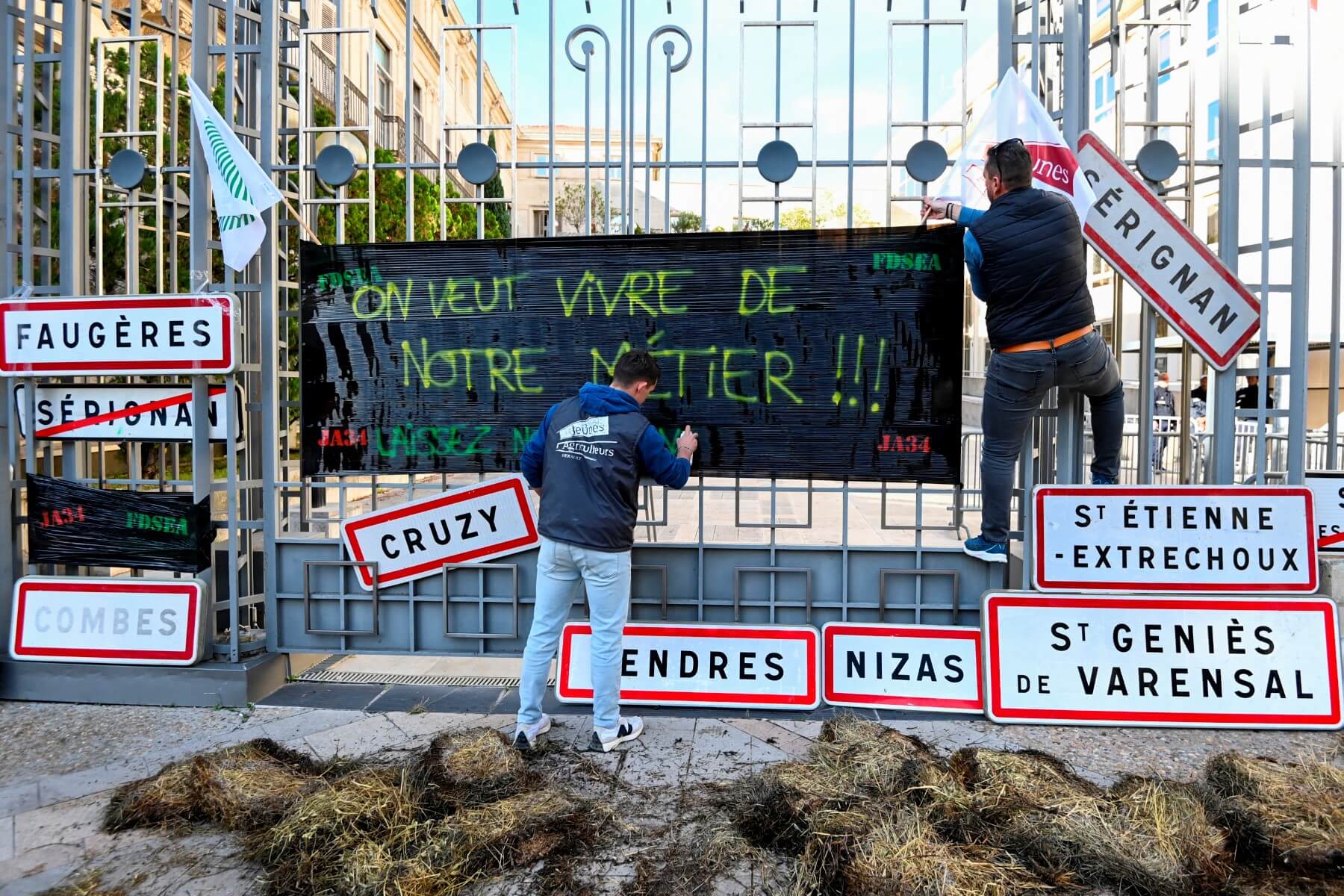
It generally targets the signposts depicting a village name at the entry and exit points of the commune.
In addition to turning the signs upside down some have been removed altogether and used at other protest points - tractors staging rolling roadblocks often have an upside down sign attached, a load of signs were dumped at the Paris Salon de l'Agriculture in February while others were dumped in central Lyon on Monday.
Crosses
A new addition to the revived protests - 'act 2' as the farmers have dubbed them - are wooden crosses and fake graves, intended to illustrate the 'death of farming'.
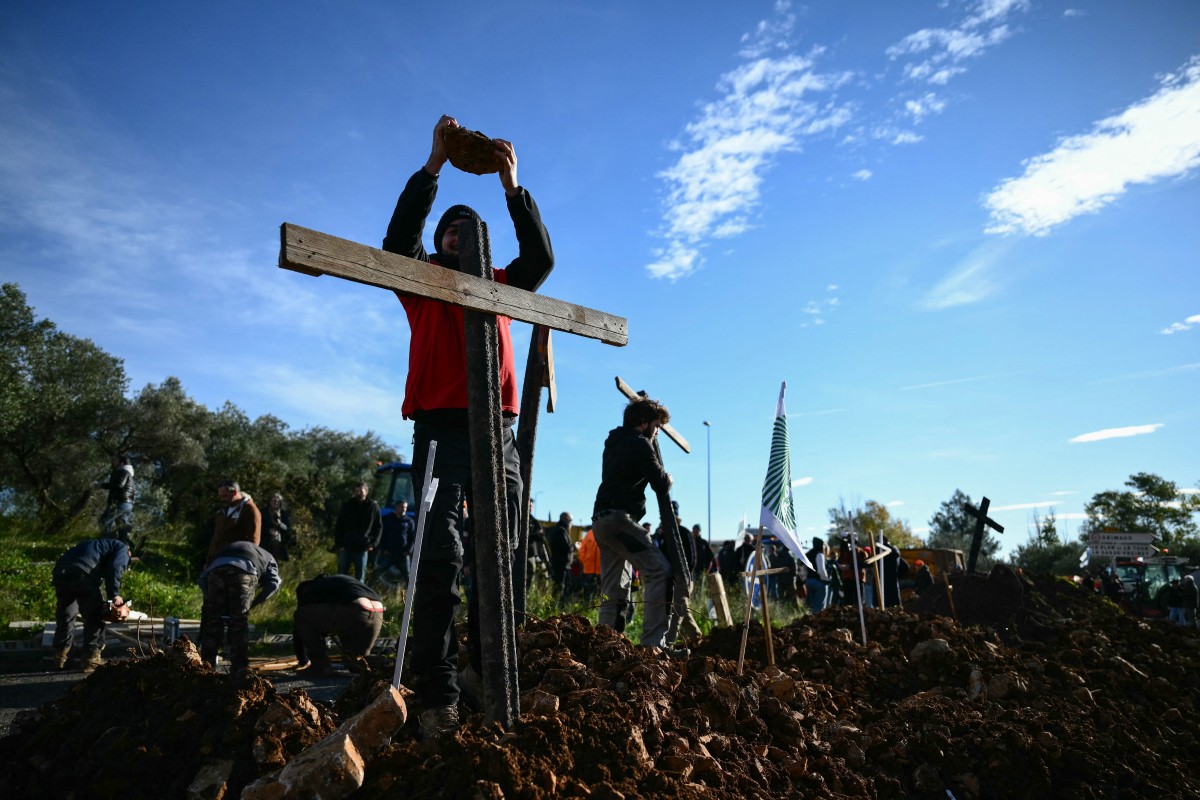
The revived protests involve many actions at roundabouts - in an echo of the 2018 Yellow Vest protests - and in many areas farmers have created a mound of earth with a wooden cross to signify what they see as the end of their way of life. In some areas fake gallows have also been erected to show the same thing.
Earth mounds
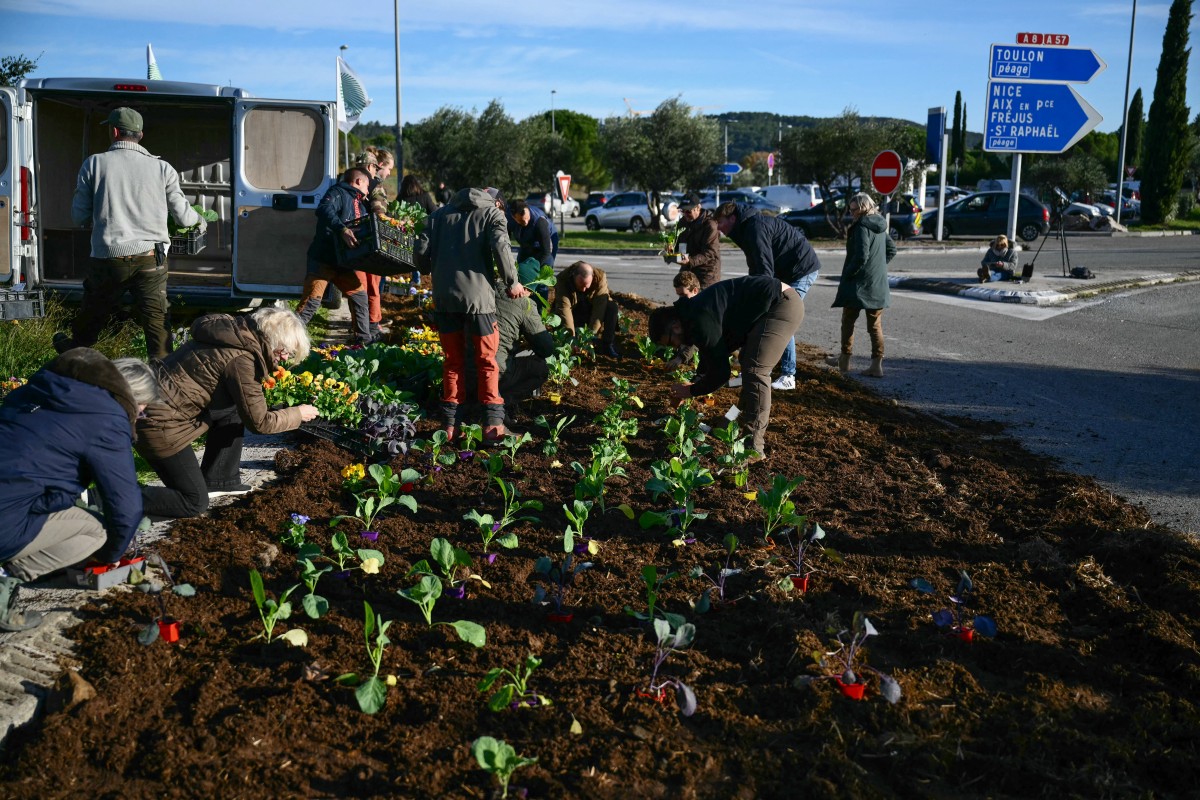
In some areas the mounds of earth have been dumped directly onto the road to create a roadblock - while at a protest in Le Cannet-des-Maures in southern France farmers planted up the earth with flowers and vegetables to symbolise their livelihood.
Other protest points
The above actions are in addition to the more traditional methods of protest, many of which are centred on the local préfectures.
Préfectures across France have seen banners and signs attached to their railings and items including food waste, manure, straw bales and tyres dumped outside, some of which were set alight.
Farmers are also forming up convoys of tractors to create rolling roadblocks, known as an Opération escargot, on roads.
You can find the latest on the protests here.
Comments