
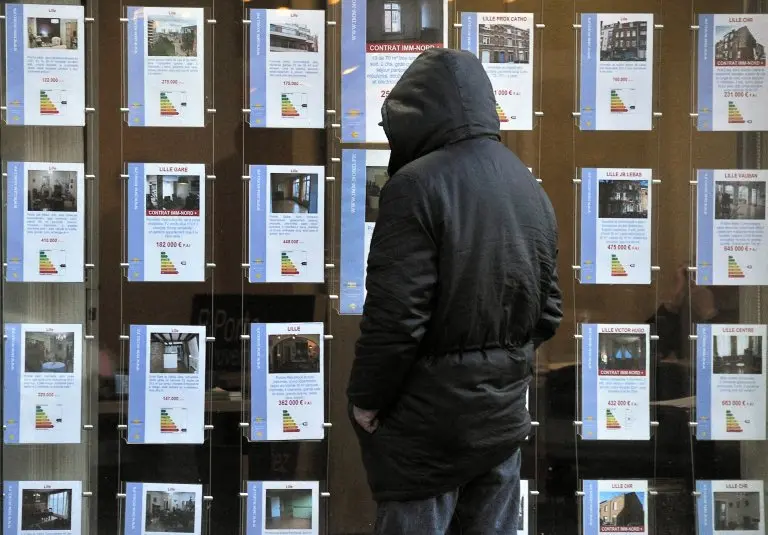
In France roughly half the population rent the home they live in, and as tenants they benefit from some quite strict legal protections including restrictions on how much they rent can be raised by, rules on what the landlord must provide and controls on being evicted.
The most famous eviction control is the trève hivernale - winter truce - which states that tenants who are in arrears with their rent cannot be evicted between November 1st and March 31st. Similarly, utility companies cannot cut off the supplies of gas or electricity to indebted customers during the winter months.
READ ALSO A beginner's guide to renting in France
Less well known, however, is extra protection for older tenants that applies all year-round.
However unlike the trève hivernale, there are quite a few conditions to eviction controls for over-65s.
In brief, the rules state that tenants who are over the age of 65 and of 'modest means' cannot be evicted unless an alternative home is offered.
The exact amount for what constitutes 'modest means' is fixed each year by decree, and also varies slightly between regions, but the limit for a single person would be €26,000 per year.
This is based off the person's French tax declarations and is calculated per household - the maximum can go right up to €80,000 per year, but that would only apply to a household that had six or more adults, of whom at least one was registered disabled or in receipt of invalidity benefits - find the full scale here.
The restriction also only applies to a place that constitutes the person's main residence and where they have lived for more than eight months.
The landlord can still evict the tenant if they can prove that they have offered comparable accommodation in the same area (for example within the same arrondissement of a city or the same commune in a rural area).
The landlord can still request that a tenant of any age leaves a property - as long as they follow the correct legal procedure - the restrictions only relate to evicting the tenant if they do not agree to leave.
So why is this a bad thing?
Although the rule gives greater protection to older people on low incomes, it can also be a disadvantage in the rental market as some landlords are reluctant to rent to older tenants as they fear they won't be able to evict them if things go wrong.
In fact the protection is quite nuanced and is certainly not a blanket ban on evicting all older tenants, but not all landlords understand the details of the law and anecdotal evidence suggests that some will refuse tenants aged 65 and older.
In general it can be hard for foreigners to crack the French rental market - especially in cities like Paris that have a housing shortage. The generous protections for tenants means that landlords are very careful to check out each tenant before renting, not wanting to get stuck with someone who refused to pay the rent and who they cannot get rid of.
7 tips for finding an apartment in Paris
As new arrivals often don't have the French documents that are demanded, that can put them at a disadvantage and it's common to need a guarantor in order to be able to sign a lease.
Comments