
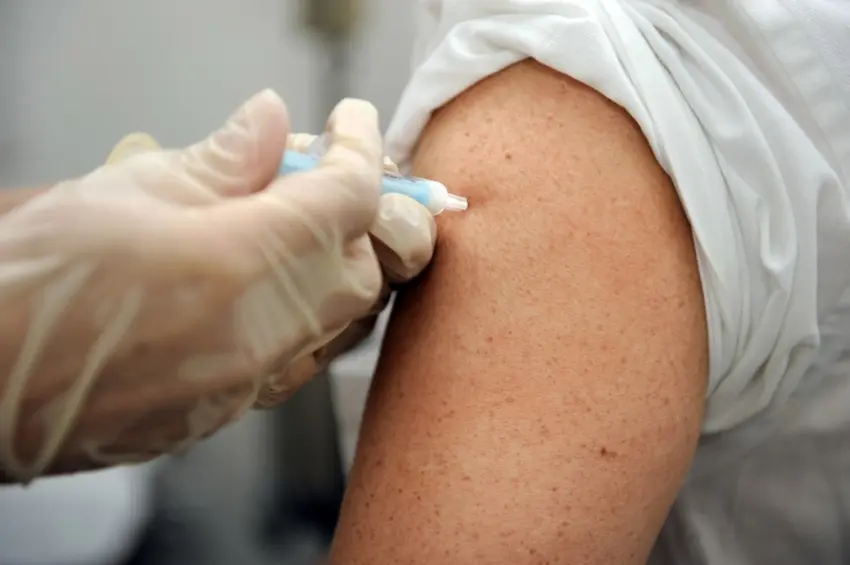
France's seasonal flu vaccination campaign will begin on Tuesday, October 14th, and it is intended to last until January 31st, though it could be extended.
Who?
Anyone who wants a flu vaccine can get one starting in mid-October.
That said, French public health authorities strongly recommend the seasonal flu vaccine for the most vulnerable people, namely:
- Anyone age 65 and older
- Pregnant women, regardless of the stage of pregnancy
- Families of infants under 6 months of age who are at risk of severe influenza (e.g., premature babies, children with congenital heart disease, congenital immune deficiency, lung, neurological or neuromuscular disorders, or a long-term illness)
- People who are obese, with a BMI of 40 or above
- People living in a care facility or nursing home, regardless of their age.
- People in close contact with immunocompromised individuals (e.g. home help assistants and healthcare professionals)
- People with health conditions that make them at risk for developing a severe form of the virus. You can find the full list here.
- Professionals exposed to swine and avian influenza viruses, to prevent transmission of human influenza viruses to animals. This is a collective protective measure against swine and avian viruses, and vaccination against human influenza can slow down its spread.
Where?
Doctors, midwives, nurses, and pharmacists can all deliver flu shots in France, with the pharmacy being a common and convenient place to be vaccinated, as many allow walk-in appointments.
What about children?
The French Haute autorité de santé recommends that all children over the age of 2 with "co-morbidities" get a seasonal influenza vaccine, meaning children in high-risk groups would also receive a voucher to get a flu shot.
You can also ask your doctor for a prescription for a vaccination if your children are in a high-risk group.
As for who can vaccinate them, doctors are qualified to vaccinate all minors, including those under the age of 11. Midwives can also vaccinate any minor who is recommended to get a flu vaccine.
In August 2023, both nurses and pharmacists in France gained the ability to prescribe and administer 14 different vaccines - including the one against seasonal influenza - to anyone over the age of 11. As such, minors above 11 can get a flu vaccine in a pharmacy, but those under the age of 11 cannot.
Previously, flu vaccine campaigns were aimed at adults, but in February 2023, French health authorities announced a change in strategy, recommending that all children over the age of 2 also get a flu vaccine.
How much?
For high-risk people, the flu vaccine is free of charge.
These groups will receive a flu vaccine voucher (bon de prise en charge). This can be taken to the pharmacist, who will then provide a vaccine free of charge.
People who fit the description of 'high-risk' ought to receive a voucher, but if this is your first time getting a flu shot in France, or you haven't received your voucher yet, you can visit your doctor, who can prescribe it for you.
If you lose the voucher, you can always ask your doctor to issue a new one.
Others
If you're not in one of the high-risk groups outlined above, you can still get the flu vaccine, but you will have to pay for it.
The price of the shot varies from €6 to €10 depending on the pharmacy.
This cost is not reimbursed on the carte vitale. If you want your doctor to administer it, you will also have to pay the standard appointment fee.
Covid boosters
Since 2023, French health authorities have recommended that at-risk groups get an annual Covid-19 booster.
Immunocompromised individuals and those over 80 can get a Covid-19 booster just three months after their last vaccination or infection. For all others, the wait time is six months.
This can be done at the same time as the flu shot, with one vaccine in each arm.
The Covid-19 vaccine remains free of charge for those registered with French social security.
The vaccine administered this year will be "Comirnaty JN1 by Pfizer/BioNTech", which is adapted to the JN.1 variant currently circulating.
Comments