
Like most countries, France produces regular census reports that show who lives in the country and how they are living. This data is then used to inform all sorts of things from government policy to historical records.
1. Who gets counted?
Anyone who has been living in France for one year or more can be counted - including foreigners. You don't need to be a citizen or have a carte de séjour to be counted, if you're in the country and have been for 12 months or more you count.
So the data includes migrants, students and temporary workers. People who have been in the country for less than 12 months can also be counted if they have a clear intention to stay - for example if they are enrolled on a two-year study programme or if they have a permanent contract of employment.
Valérie Roux, head of the demography department at the National Institute of Statistics and Economic Studies (INSEE) which collects the census data told BFMTV: "The total time spent on the territory and the projected time must be at least one year."
2. When does it happen?
The data collecting is done between January and March. Smaller communities have the whole population counted, but on a rolling programme over five years, larger places get a count every year, but only eight percent of the population is surveyed.
So if you live in a commune of more than 10,000 people you could be one of the surveyed eight percent this year. If you live in a smaller place you might not be surveyed in 2025 - click here to find out when the next count is for your area - scroll down to the bottom of the page and put your commune name or postcode into the search bar.
This year the counts take place between January 16th and February 22nd.
3. How is the counting done?
In good news for those worried that their French might not be up to a detailed interview, the count is done by filling in a questionnaire.
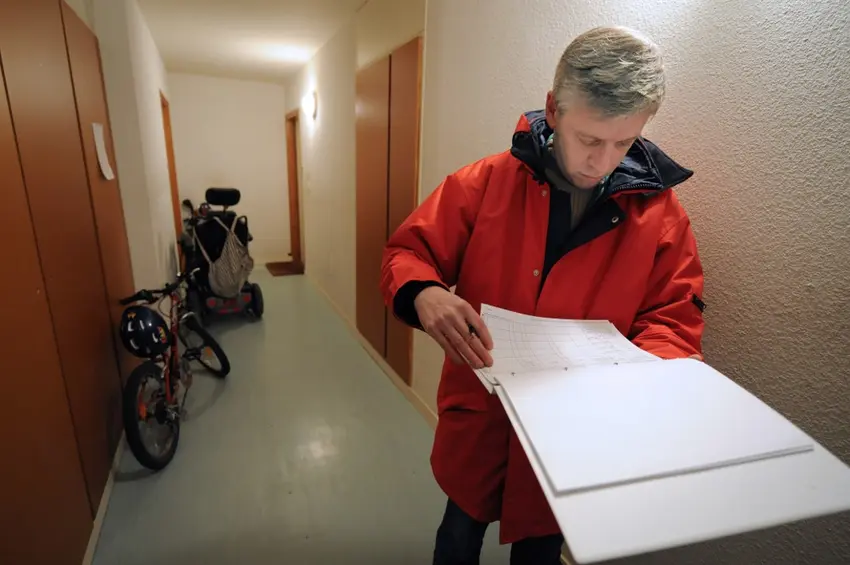
The 24,000 enumerators go door to door to the households selected for counting and hand out login details for the online version of the questionnaire. About 60 percent of people choose to fill in the questionnaire online, but if you prefer the enumerators can also hand out paper versions of the questionnaire.
Taking part is a legal obligation so you must do it if selected. According to INSEE, about 96 percent of people selected fill in the questionnaire fully.
4. What do they ask?
There are two parts to the questionnaire - one part about where you live and one part about you.
The part about your home will ask questions like the size, number of rooms, year of construction, while the other part asks about 30 questions including your age, place of birth, marital status, professional status and what methods of transport you use.
READ ALSO What's in a name? How to fill out French forms
They will not ask about your religion or ethnicity, but this year a new question is causing some controversy. It asks where your parents were born, and human rights groups are worried that this data could be used by anti-immigrant politicians.
They are calling on people not to answer this question - it is one of the optional questions on the form, so stating that you prefer not to answer is perfectly legal.
5. What happens to the data?
Only INSEE can see the raw data, which cannot be passed on to governments or tax authorities without first being thoroughly anonymized. Historic census data is released after 100 years, so if you have French ancestors you can read up about their lives through their census information.
Although the counting is done every year, the census itself is only released every five years.
French vocab
Le recensement - the census
Recenser - to count
Les agents recenseurs - enumerators (ie the people who actually go door to door handing out the questionnaires)
Feuille de logement - the part of the questionnaire concerning your home
Bulletin individuel - the part with the individual questions
Lieu de naissance - place of birth
Lieu de naissance de vos parents - parent's place of birth
Situation conjugale - marital status
Niveau de diplôme - education level
Activité professionnelle - professional status
Moyens de transports utilisés - methods of transport used
Je ne souhaite pas répondre - I prefer not to answer
Comments (1)