
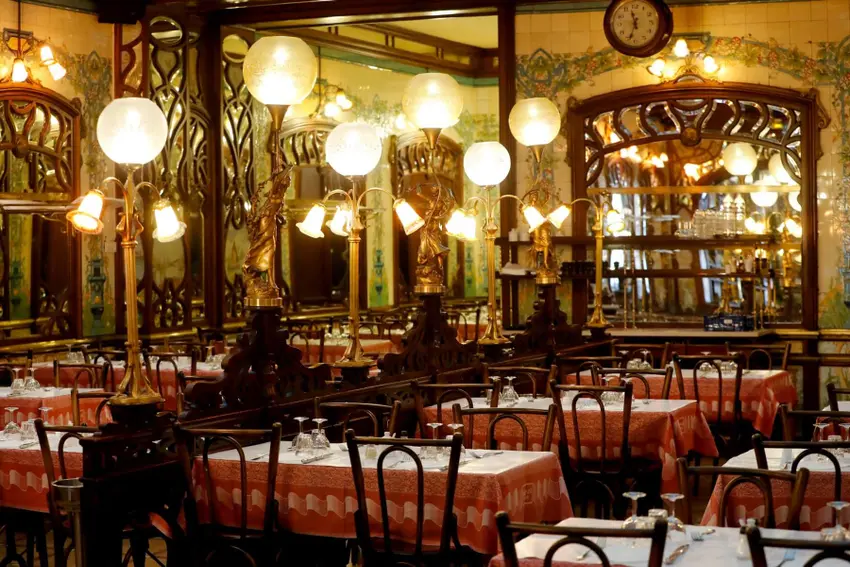
Close to the Eiffel Tower, right in the heart of the tourist-focused and often over-priced centre of Paris, a new restaurant has opened - Bouillon Champ-de-Mars, serving classic French starters like oeuf mayonnaise for €1.90 and a main course of sausage and potato for €9.50.
By the standards of central Paris, these are extremely reasonable prices - which is one of the hallmarks of a 'bouillon' restaurant.
The other is the serving of classic French bistro dishes, in a no-frills atmosphere.
For those in the know, bouillon restaurants are where it's at - every weekend a queue snakes down the street not far from the Moulin Rouge in Paris. This is not some hoard of clueless foreigners easy prey for the tourist traps that dot Pigalle and Montmartre.
These are savvy and often stylish Parisians eager to sit down to one of the best value meals in the French capital.
Bouillon Pigalle's egg mayonnaise has voted the best in the world by a jury of French gastronomes - and sells for less than €2.
So it is easy to see why the crowds are flocking there and to a clutch of other older and grander "bouillon" restaurants, which serve classic French comfort food at modest prices.
These places, where you can eat well amid Art Nouveau splendour for as little as €20 for three courses, are having something of a revival.
"What is not to like about this?" declared Edouard, the moustachioed patriarch of the Bordier clan, with three generations of his family from the Paris suburbs seated around the table at Bouillon Julien.
"Just look at this," he said, pointing at the enormous cream profiterole before him and then sweeping his hand out to take in the restaurant's original Belle Epoque decor.
"And they say the French no longer know to live!" he laughed.
The South Korean fashionistas at the next table, where singer Edith Piaf once dined daily, told AFP that it was their "favourite and cheapest meal" since they arrived.
One, Kim Bo-young, liked its thick paper tablecloths so much she wondered aloud about making a dress out of them.
Bouillons were invented to serve up cheap soups and stews at speed to busy Parisians in the 19th century.
"Bouillon" means broth in French, and it was from the restorative qualities of their principal dish that the word "restaurant" comes.
Bouillon Julien is known for its clever hearty food as well as the frescos and mosaics in its beautiful 113-year-old interior.
Walking through mahogany dining hall with its glade-green walls is like "going back in time", said Kim, 32, tucking into a rabbit terrine with nuts and ravigote sauce for €5.20.
It is a similar story at Chartier - the daddy of all Parisian bouillons which has been going since 1896 - where the white-aproned waiters write down the orders on the paper tablecloth before totting up the bill with head-spinning speed.
Chartier opened a second enormous restaurant earlier this year in Montparnasse in the south of the city with a stunning brass and tiled interior that dates from 1903.
Serving traditional starters like snails and leek vinaigrette at unbeatable prices, the hip French gastronomic guide Le Fooding saw it as further proof of the trend towards "le retrofoodisme" that has seen French diners re-embrace butter.
Its director Alexandre Cammas said the bouillon revival was a part of a wider return to comfort food.
"This is cooking that gives you a big hug in contrast to (top-end) cuisine which can be very refined and cold," he told AFP.
But Chartier boss Yann Hulin bristled at the thought that there was anything in the least trendy about what they were doing.
"We have just kept doing what we always did.
"If there is a trend, it is to copy us."
Hulin said that having been made to pay through the nose for trendy food, the public want to be served quickly and "eat good and cheap food, that is prepared simply and well".
The high turnover of diners allowed Chartier and the other bouillons to keep their prices down, he added.
Jean-Christophe Le Ho of Bouillon Pigalle said sourcing quality ingredients direct from producers also cut out the middleman.
He said his nostalgic menu was about rediscovering the joy of eating traditional French dishes that are being threatened by fast food, pizzerias and sushi joints.
A century ago Paris had 250 bouillons before their numbers withered to just one.
But the "strong demand we have found... for these dishes our grandmothers made" shows they very much have a future, Le Ho insisted.
Comments