
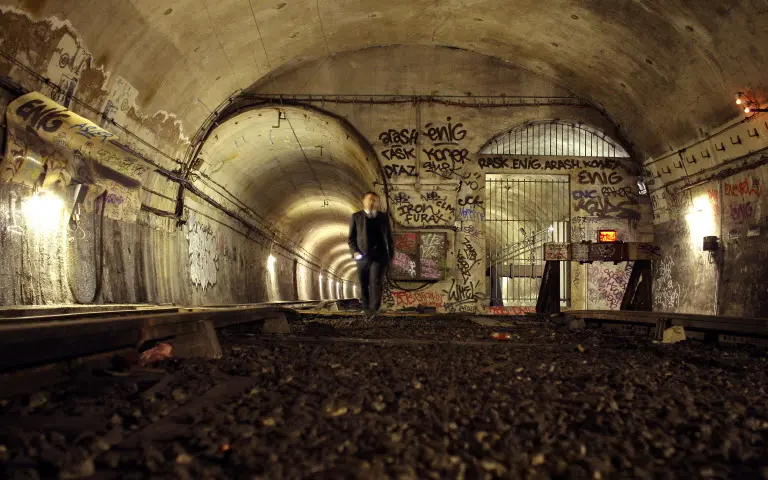
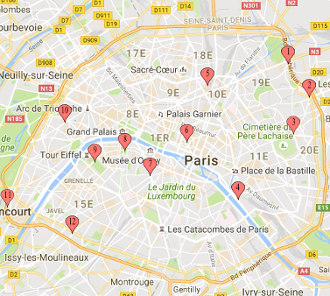
The ghost stations on the above map are; 1 Haxo, 2 Porte des Lilas Cinéma, 3 Martin Nadaud, 4 Arsenal, 5 Gare du Nord UFSRT, 6 Les Halles, 7 Croix Rouge, 8 Invalides, 9 Champ-de-Mars, 10 Victor Hugo, 11 Porte Molitor, 12 Porte de Versailles
Visiting them alone isn't recommended and is illegal, but some are open to the public for the Journées du Patrimoine (Annual Heritage Days). Thankfully, and thanks to Paris Zig Zig, there is plenty of information about the abandoned underground stations.
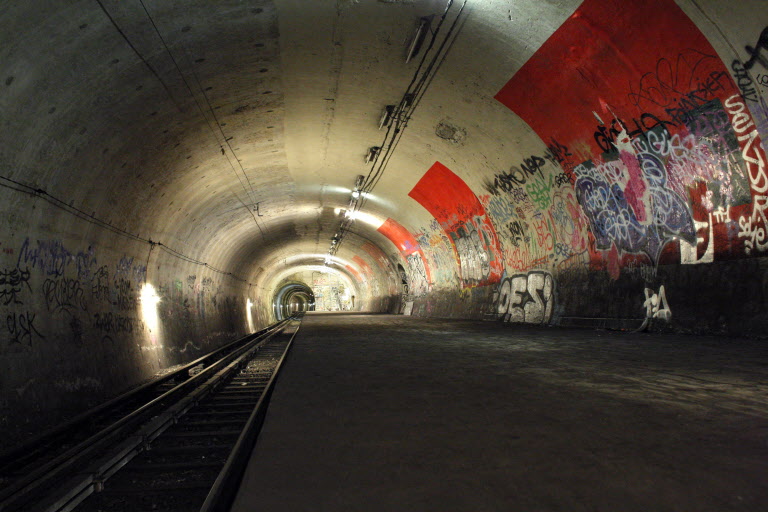
Abandoned for war
As France entered the Second World War, workers were called up to fight in the army. The lack of personnel and the need to cut costs meant that many stations were closed. Stations such as Arsenal (near Bastille in the east), Champ de Mars (by the Eiffel Tower), Saint-Martin (near Place de la République), or Croix-Rouge (in the Latin Quarter) were among these.
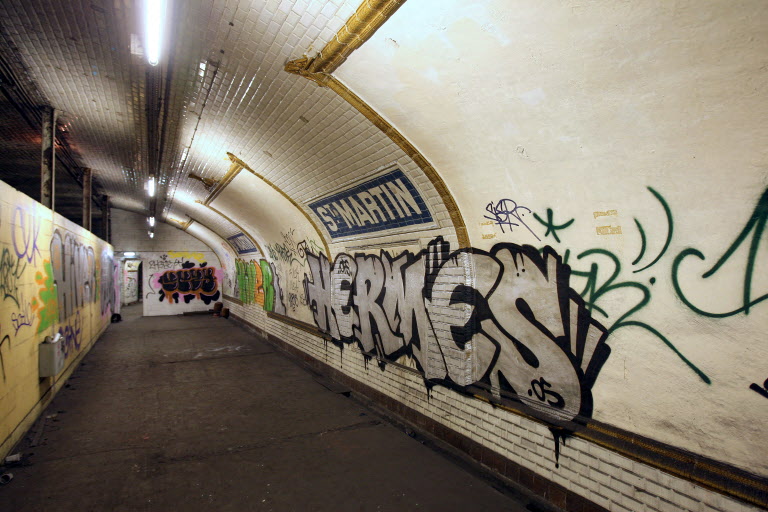
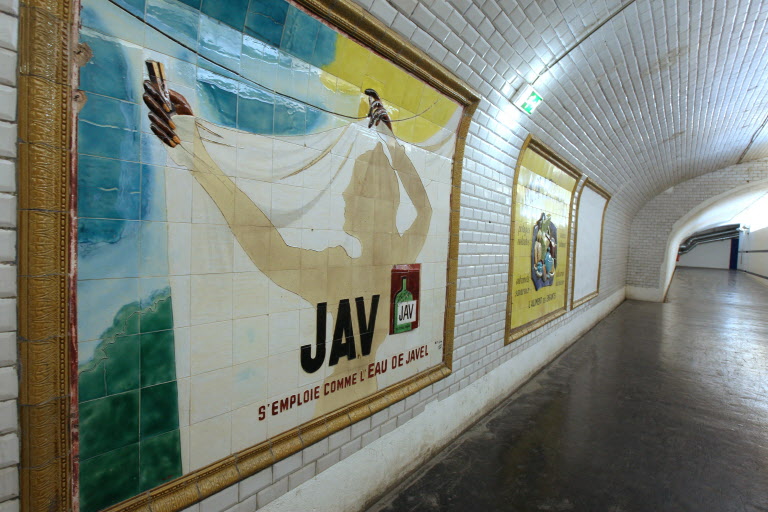
Historic adverts
The Saint-Martin station still has adverts from the 1940s on its walls. The halls are currently used as a day centre for the homeless.
Transformations
Many of these ghost Metro stations have undergone transformations and are still used for a variety of different reasons, whether for filming or for training staff.
The old Metro station at Gare du Nord, known as known as Gare du Nord USFRT has been converted into the training grounds for new Metro drivers while Arsenal is used to train technicians, engineers and electricians.
The former Porte Maillot station in the north-west of Paris is now used for maintaining the trains.
The entrance to the Martin Nadaud station near the Père Lachaise cemetery in eastern Paris is now used to access Gambetta. Its platforms however, remain deserted.
Re-built stations
Les Halles, right in the centre of the city, was rebuilt a couple of metres away to facilitate the connection with the suburban RER train station when it was built in the 1970s.
The original Victor Hugo station in western Paris has also been rebuilt. New trains that came into service in the 1930s couldn't handle the initial sharp corner safely and it was decided to move the station a few metres north.
Filming
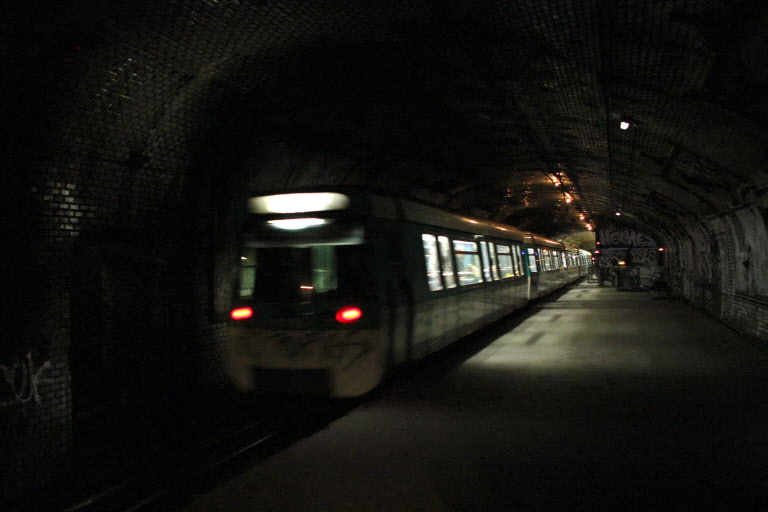
Portes des Lilas station in the north-east of the city is a working station - line 11 passes through it - but it also has a secret 'ghost' section that is used for filming.
An extra platform and stretch of track, no longer used by the city network, are available to hire for film crews.
Crews can either just film on the platform, perhaps with 1930s adverts added for a period piece, or have a train moving along the track itself for an action sequence, in which case transport operator RATP will, for a fee, provide a driver.
Filming elsewhere on the Metro network is not allowed, as it disrupts traffic, so if you have ever seen a film or TV show with a scene on the Paris Metro, the chances are it was shot at Porte des Lilas.

READ ALSO Why Paris is a world-leader for film and TV
Never saw the light of day
The tunnels to reach Porte Molitor near Bois de Boulogne in Western Paris and Haxo station in the north east of city were never built. A platform inside the Invalides station by the River Seine is also closed-off and has never been accessed by a train.
The Porte de Versailles station in the south of Paris has been replaced and all that remains from the original station are the tiles on the walls. The previous platforms have been torn down to make space for a train garage.
Back in 2014, there was hope for transport buffs (and swimmers) when Nathalie Kosciusko-Morizet, who was running for mayor proposed that the old Metro stations be transformed into cinemas and underground swimming pools. But then she lost out to Anne Hidalgo, who decided that she had other priorities for the city's transport network.
by James Vasina
Comments