Wolves to be 'educated' not to kill sheep

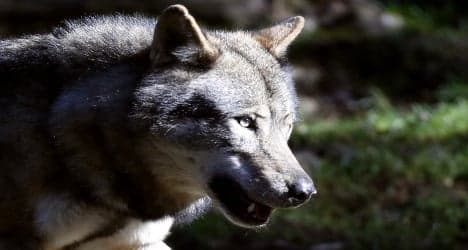
In a bid to try and crackdown on the number of wolf attacks on farm animals the French government has announced a plan to try and "educate" the wild beasts. The proposal has been greeted with mixed reactions.
Can you teach a wolf not to eat sheep?
The idea is being floated in France, where the return of the wolf has got farmers and environmentalists at each other's throats.
Under a proposed "National Wolf Plan," the government says it will conduct experiments into "educating" the canine carnivore, which is spreading stealthily in remote areas.
Rest assured, this scheme does not entail lecturing wolves about the cuteness of lambs or trying to convert them to vegetarianism.
Instead, it entails capturing individual wolves that are known to attack a local flock and then marking these bothersome predators before letting them go.
The theory is that the animal will be so traumatised by the experience that it will leave the sheep alone and instead hunt for deer, boar, rabbits and other wild animals.
But if the wolf remains a problem, the ID makes it easier to be singled out and shot.
"Eleven of France's regional parks have said they are willing to take part in the experiments," Ecology Minister Delphine Batho said this week, as the proposal met a mixed reception.
Once plentiful, the wolf officially died out in France in the 1930s, wiped out by farmers and hunters.
More than a half a century later, wolves began creeping back, crossing the border from Italy. In 1992, suspicions of the comeback were confirmed when a pair of wolves were spotted in the Mercantour park in the southeast of the country.
Around 250 wolves in France
Today, according to Eric Marboutin at the National Office for Hunting and Wildlife (ONCFS), there are around 250 wolves, 90 percent of them in the Alps, and scatterings of others in the east and southwest of France, including the eastern Pyrenees.
In 2011, a wolf was spotted for the first time in the Vosges, in eastern France, and last year, a wolf was photographed in a cornfield in the southwestern department (county) of Gers, the westernmost point of the species' advance.
The wolf is shielded by the Bern Convention on European wildlife, and in 2007 it joined other mammals on a list of species that in France are given special protection, except in specific cases where they pose a threat.
But flocks are under rising pressure as the wolves expand.
Two powerful groups -- the agricultural lobby and the environmental movement -- are fiercely at odds, despite efforts to forge consensus in a "National Wolf Group" that includes politicians.
Emotions flared last month in the upper house of the French parliament, where rural regions are strongly represented.
Senator Pierre Bernard-Reymond of the High Alps region blasted Parisians for what he said was their cosy image of an ancient predator.
"It's time to release a few wolfpacks in the Vincennes Park or the Luxembourg Gardens," he said -- a suggestion that was not adopted.
In 2008, 2,680 sheep were killed by wolves, according to an official count; this rose to 4,920 in 2011 and 5,848 in 2012, when the state paid out compensation of around two million euros ($2.7 million).
At present, 11 wolves are allowed to be shot each year. Anti-wolvers say that this restriction is far too inflexible.
Under the 2013-2017 plan, the figure would be adjusted in line with scientific estimates of what is a sustainable wolf population.
"The wolf is and will remain a species that is strictly protected," the ecology and agricultural ministries said in a joint statement.
"However, bearing in mind the healthy population dynamics of this species, it is possible to fine-tune the methods for managing it."
Capturing and marking a problem animal would mean that only the real culprits would be targeted. Or so it is hoped.
Jean-Jacques Blanchon of the pro-wolf Nicolas Hulot Foundation said wolf education had worked successfully in pilot experiments in the United States, "so we should make the effort to see what it can do for us."
Don't bother, retorted others.
"You might as well try to educate a shark," said Daniel Spagnou, a member of a commission probing the fraught relationship between wolves and mountain herdsmen.
"What a circus! Whatever next? Wolf-tamers?"
Comments
See Also
Can you teach a wolf not to eat sheep?
The idea is being floated in France, where the return of the wolf has got farmers and environmentalists at each other's throats.
Under a proposed "National Wolf Plan," the government says it will conduct experiments into "educating" the canine carnivore, which is spreading stealthily in remote areas.
Rest assured, this scheme does not entail lecturing wolves about the cuteness of lambs or trying to convert them to vegetarianism.
Instead, it entails capturing individual wolves that are known to attack a local flock and then marking these bothersome predators before letting them go.
The theory is that the animal will be so traumatised by the experience that it will leave the sheep alone and instead hunt for deer, boar, rabbits and other wild animals.
But if the wolf remains a problem, the ID makes it easier to be singled out and shot.
"Eleven of France's regional parks have said they are willing to take part in the experiments," Ecology Minister Delphine Batho said this week, as the proposal met a mixed reception.
Once plentiful, the wolf officially died out in France in the 1930s, wiped out by farmers and hunters.
More than a half a century later, wolves began creeping back, crossing the border from Italy. In 1992, suspicions of the comeback were confirmed when a pair of wolves were spotted in the Mercantour park in the southeast of the country.
Around 250 wolves in France
Today, according to Eric Marboutin at the National Office for Hunting and Wildlife (ONCFS), there are around 250 wolves, 90 percent of them in the Alps, and scatterings of others in the east and southwest of France, including the eastern Pyrenees.
In 2011, a wolf was spotted for the first time in the Vosges, in eastern France, and last year, a wolf was photographed in a cornfield in the southwestern department (county) of Gers, the westernmost point of the species' advance.
The wolf is shielded by the Bern Convention on European wildlife, and in 2007 it joined other mammals on a list of species that in France are given special protection, except in specific cases where they pose a threat.
But flocks are under rising pressure as the wolves expand.
Two powerful groups -- the agricultural lobby and the environmental movement -- are fiercely at odds, despite efforts to forge consensus in a "National Wolf Group" that includes politicians.
Emotions flared last month in the upper house of the French parliament, where rural regions are strongly represented.
Senator Pierre Bernard-Reymond of the High Alps region blasted Parisians for what he said was their cosy image of an ancient predator.
"It's time to release a few wolfpacks in the Vincennes Park or the Luxembourg Gardens," he said -- a suggestion that was not adopted.
In 2008, 2,680 sheep were killed by wolves, according to an official count; this rose to 4,920 in 2011 and 5,848 in 2012, when the state paid out compensation of around two million euros ($2.7 million).
At present, 11 wolves are allowed to be shot each year. Anti-wolvers say that this restriction is far too inflexible.
Under the 2013-2017 plan, the figure would be adjusted in line with scientific estimates of what is a sustainable wolf population.
"The wolf is and will remain a species that is strictly protected," the ecology and agricultural ministries said in a joint statement.
"However, bearing in mind the healthy population dynamics of this species, it is possible to fine-tune the methods for managing it."
Capturing and marking a problem animal would mean that only the real culprits would be targeted. Or so it is hoped.
Jean-Jacques Blanchon of the pro-wolf Nicolas Hulot Foundation said wolf education had worked successfully in pilot experiments in the United States, "so we should make the effort to see what it can do for us."
Don't bother, retorted others.
"You might as well try to educate a shark," said Daniel Spagnou, a member of a commission probing the fraught relationship between wolves and mountain herdsmen.
"What a circus! Whatever next? Wolf-tamers?"
Join the conversation in our comments section below. Share your own views and experience and if you have a question or suggestion for our journalists then email us at [email protected].
Please keep comments civil, constructive and on topic – and make sure to read our terms of use before getting involved.
Please log in here to leave a comment.