Language barrier: French resistance to Franglais

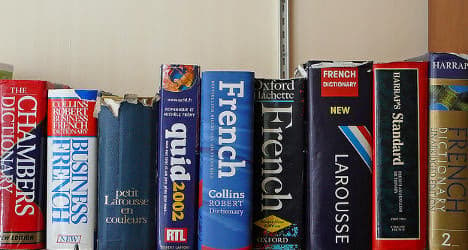
In the second instalment of The Local's opinion series Tête-a-tête, we examine efforts to shield the French language from the invasion of Franglais. We hear from a defiant Ministry of Culture in Paris as well opponents of linguistic protectionism.
The French government’s recent decision to scrap the English word “hashtag” and replace it with the Gallic word “mot-dièse” not only sparked a Twitter frenzy but it also reignited an old debate over the future of the French language and an ongoing battle for the authorities to protect it from the invasion of "Franglais".
With English continuing to dominate the world of business, technology, science and even the offices of the European Commission where most documents are now produced first in English, the French language authorities could have been forgiven for throwing in the towel.
But they have not and continue to battle to promote and protect the French language. The word “mot-dièse” comes ten years after France threw the word email into its deleted items and asked people instead to use “courriel”. Two years ago a similar brouhaha was stirred when Paris scrapped a raft of IT terms such as “spamming” and “hacker,” replacing them with “arrosage” and “fouineur”.
But one of the problems for authorities is that the efforts of the fabled Academie Française and other government organizations are not always appreciated by their compatriots, many of whom believe they are wasting their time.
In this week's Tête-a-tête, The Local examines this divisive debate, hearing first from one of the guardians of the French language, Bénédicte Madinier from the Ministry of Culture, as well as from some of those Twitter users who ridiculed the authorities during the recent Hashtag-gate.
Is it right to invent new words to protect the French language from Franglais?
Yes, says Madinier…
“People say 'it’s impossible', or 'it’s ridiculous' to use a French word, but is it really? Is it really that ridiculous to ask people to use 'nuage' instead of 'cloud'? For some it’s just fashionable to want to use English, but like all trends, this will change. We found that up until recently a lot of young people would say 'c’est cool' but now more and more people are saying 'c’est frais'.
Is it really asking too much for people to use 'mot-dièse' instead of 'hashtag', and 'courriel' instead of 'email'? I don’t know why there was such a big reaction to 'mot-dièse'. We introduced some other new words on the same day but nobody talked about them. What people need to understand is that although there was a certain amount of ridicule on Twitter – a reaction we are used to – this does not reflect the views of all the French people.
Twitter users are mostly young people but I would say, go into the street, speak to people of all ages and ask them what 'hashtag' means? The majority of the population does not know what it is. I read an opinion poll that said 33 percent of the population were ready to use 'mot-dièse' from now on.
Someone emailed me recently to see whether we had a French word for Masterclass and I told them yes, it’s the same 'Classe de maître'. They were shocked and said, ‘we can’t use that, it's not fashionable enough', and I replied, 'Do you think the word masterclass is really fashionable in English? Of course not'.
It’s true that French is more rigid than English. In English you don’t hesitate to create words but in French we often have to check the construction and prepositions, and so on. French is a bit more timid but it’s not incapable of changing. We need to respect the language. We can’t just invent nonsense. If the word is well chosen and people understand it, then it will be used. The world is becoming smaller and we have to adapt.
We do not want to fight against English, but rather to promote the French language. It’s completely different. We are French, we are in France but we favour multi-lingualism. The prevalence of English is much greater now than before but not just in French, in pretty much all languages.
We don’t do this for our own pleasure. We need to show people that if you love the language, you need to use it. Some people are totally indifferent. They criticize us and say it’s ridiculous. But we need to show them that that attitude is dangerous.
The French language is alive and well. It is still an important international language. Obviously, everything dies out at some point, including languages (including English, for that matter) but for the moment, French has a bright future."
Bénédicte Madinier, is head of development and enrichment of the French language at the General Delegation of the French Language and the Language of France (DGLFLF), a unit of the Ministry of Culture and Communication. The DGLFLF works to ensure the implementation of the 1994 Toubon law, which made French obligatory in government documents and state institutions and works with the General Commission of Terminology and Neologisms to develop new terminology.
No, say several Twitter users…
“I find it all impractical. We want to preserve the language, OK, why not? But instead of making it more user-friendly, for instance having simpler verb conjugations, shortening words etc, they prefer to force people to use words created from scratch when people are already happily using the originals, for example hashtag, manga or handball.
This kind of approach is totally ineffective. Does anyone in France really use the words baladeur (Walkman), coup de pieds de coin (corner kick) or even courriel (email). It borders on the ridiculous. We have a huge public deficit and we are paying people to create words that no one uses.
Deep down, French people still have memories of France's previous grandeur, but we cannot accept that this is all in the past.”
- Jean-Francois Naud, a web project manager who tweets under @frenchpolitics
“I've always thought it was a bit silly and unproductive to make rules for the protection of the French language. The world is evolving, we live in the technological age, it's obvious people would speak English. Coming up with French equivalents of English expressions is to me a really useless idea — and in the case of 'motdièse', actually ridiculous.
I'm not sure I have the right solution to promote the French language, but I'd rather have festivals or poetry months or whatever, rather than measures that make the French look stupid.”
- Gaelle Laforest, a French national living in London. @gaellelaforest
“I actually support the idea to preserve culture, or language in this case. But banning the use of certain words is never even an option.
There are lots of other ways to encourage people to use their own language, i.e. through literature or poetry. Show them the beauty of their language instead of forcing them.”
- Twitter user ajeng @anjaparamitha
"From an educational viewpoint, teaching French as the natural second language in Britain is now outdated since Polish is now officially the second language of Britain. From an EU perspective, German is the most widely spoken language in the European community, with English being widely spoken, heavily used and well understood.
Logically, German and English should therefore be the two principally protected languages that are upheld for and by EU operations. Furthermore, German should become a natural second language taught in British schools, given its strong and wide presence in the EU and its relations.
Jacques Chirac was booed and jeered for using English at an EU summit in 2006, but the French people ignored the fact that their request for all EU legal operations to be conducted in French was a high and unrealistic demand."
- Rosie MacLeod, who presented a debate on protecting the French language for international debate association Idebate.org. Despite the argument she makes here, she describes herself as "staunchly pro-French language protection".
What do you think about France’s efforts to protect the French language? Tell us in the comments section below.
Comments
See Also
The French government’s recent decision to scrap the English word “hashtag” and replace it with the Gallic word “mot-dièse” not only sparked a Twitter frenzy but it also reignited an old debate over the future of the French language and an ongoing battle for the authorities to protect it from the invasion of "Franglais".
With English continuing to dominate the world of business, technology, science and even the offices of the European Commission where most documents are now produced first in English, the French language authorities could have been forgiven for throwing in the towel.
But they have not and continue to battle to promote and protect the French language. The word “mot-dièse” comes ten years after France threw the word email into its deleted items and asked people instead to use “courriel”. Two years ago a similar brouhaha was stirred when Paris scrapped a raft of IT terms such as “spamming” and “hacker,” replacing them with “arrosage” and “fouineur”.
But one of the problems for authorities is that the efforts of the fabled Academie Française and other government organizations are not always appreciated by their compatriots, many of whom believe they are wasting their time.
In this week's Tête-a-tête, The Local examines this divisive debate, hearing first from one of the guardians of the French language, Bénédicte Madinier from the Ministry of Culture, as well as from some of those Twitter users who ridiculed the authorities during the recent Hashtag-gate.
Is it right to invent new words to protect the French language from Franglais?
Yes, says Madinier…
“People say 'it’s impossible', or 'it’s ridiculous' to use a French word, but is it really? Is it really that ridiculous to ask people to use 'nuage' instead of 'cloud'? For some it’s just fashionable to want to use English, but like all trends, this will change. We found that up until recently a lot of young people would say 'c’est cool' but now more and more people are saying 'c’est frais'.
Is it really asking too much for people to use 'mot-dièse' instead of 'hashtag', and 'courriel' instead of 'email'? I don’t know why there was such a big reaction to 'mot-dièse'. We introduced some other new words on the same day but nobody talked about them. What people need to understand is that although there was a certain amount of ridicule on Twitter – a reaction we are used to – this does not reflect the views of all the French people.
Twitter users are mostly young people but I would say, go into the street, speak to people of all ages and ask them what 'hashtag' means? The majority of the population does not know what it is. I read an opinion poll that said 33 percent of the population were ready to use 'mot-dièse' from now on.
Someone emailed me recently to see whether we had a French word for Masterclass and I told them yes, it’s the same 'Classe de maître'. They were shocked and said, ‘we can’t use that, it's not fashionable enough', and I replied, 'Do you think the word masterclass is really fashionable in English? Of course not'.
It’s true that French is more rigid than English. In English you don’t hesitate to create words but in French we often have to check the construction and prepositions, and so on. French is a bit more timid but it’s not incapable of changing. We need to respect the language. We can’t just invent nonsense. If the word is well chosen and people understand it, then it will be used. The world is becoming smaller and we have to adapt.
We do not want to fight against English, but rather to promote the French language. It’s completely different. We are French, we are in France but we favour multi-lingualism. The prevalence of English is much greater now than before but not just in French, in pretty much all languages.
We don’t do this for our own pleasure. We need to show people that if you love the language, you need to use it. Some people are totally indifferent. They criticize us and say it’s ridiculous. But we need to show them that that attitude is dangerous.
The French language is alive and well. It is still an important international language. Obviously, everything dies out at some point, including languages (including English, for that matter) but for the moment, French has a bright future."
Bénédicte Madinier, is head of development and enrichment of the French language at the General Delegation of the French Language and the Language of France (DGLFLF), a unit of the Ministry of Culture and Communication. The DGLFLF works to ensure the implementation of the 1994 Toubon law, which made French obligatory in government documents and state institutions and works with the General Commission of Terminology and Neologisms to develop new terminology.
No, say several Twitter users…
“I find it all impractical. We want to preserve the language, OK, why not? But instead of making it more user-friendly, for instance having simpler verb conjugations, shortening words etc, they prefer to force people to use words created from scratch when people are already happily using the originals, for example hashtag, manga or handball.
This kind of approach is totally ineffective. Does anyone in France really use the words baladeur (Walkman), coup de pieds de coin (corner kick) or even courriel (email). It borders on the ridiculous. We have a huge public deficit and we are paying people to create words that no one uses.
Deep down, French people still have memories of France's previous grandeur, but we cannot accept that this is all in the past.”
- Jean-Francois Naud, a web project manager who tweets under @frenchpolitics
“I've always thought it was a bit silly and unproductive to make rules for the protection of the French language. The world is evolving, we live in the technological age, it's obvious people would speak English. Coming up with French equivalents of English expressions is to me a really useless idea — and in the case of 'motdièse', actually ridiculous.
I'm not sure I have the right solution to promote the French language, but I'd rather have festivals or poetry months or whatever, rather than measures that make the French look stupid.”
- Gaelle Laforest, a French national living in London. @gaellelaforest
“I actually support the idea to preserve culture, or language in this case. But banning the use of certain words is never even an option.
There are lots of other ways to encourage people to use their own language, i.e. through literature or poetry. Show them the beauty of their language instead of forcing them.”
- Twitter user ajeng @anjaparamitha
"From an educational viewpoint, teaching French as the natural second language in Britain is now outdated since Polish is now officially the second language of Britain. From an EU perspective, German is the most widely spoken language in the European community, with English being widely spoken, heavily used and well understood.
Logically, German and English should therefore be the two principally protected languages that are upheld for and by EU operations. Furthermore, German should become a natural second language taught in British schools, given its strong and wide presence in the EU and its relations.
Jacques Chirac was booed and jeered for using English at an EU summit in 2006, but the French people ignored the fact that their request for all EU legal operations to be conducted in French was a high and unrealistic demand."
- Rosie MacLeod, who presented a debate on protecting the French language for international debate association Idebate.org. Despite the argument she makes here, she describes herself as "staunchly pro-French language protection".
Join the conversation in our comments section below. Share your own views and experience and if you have a question or suggestion for our journalists then email us at [email protected].
Please keep comments civil, constructive and on topic – and make sure to read our terms of use before getting involved.
Please log in here to leave a comment.